



LG Group is accelerating its push into the artificial intelligence (AI) infrastructure market as Chairman Koo Kwang-mo’s “One LG” strategy begins to translate into more concrete business opportunities through partnerships with Microsoft and Nvidia.
The South Korean conglomerate is expanding cooperation with Microsoft across AI data centers, AI transformation (AX) and physical AI, while LG Electronics and LG Energy Solution are strengthening their positions in Nvidia’s AI factory ecosystem through cooling and energy storage technologies, respectively.
The strategy centers on combining the capabilities of LG’s affiliates to provide integrated solutions for AI infrastructure, linking cooling systems, power management, energy storage and IT services. As global technology companies increase investment in AI computing capacity, LG aims to turn rising demand for data center infrastructure into a new engine of growth.
<>LG and Microsoft Expand Strategic Cooperation Across Three AI Areas
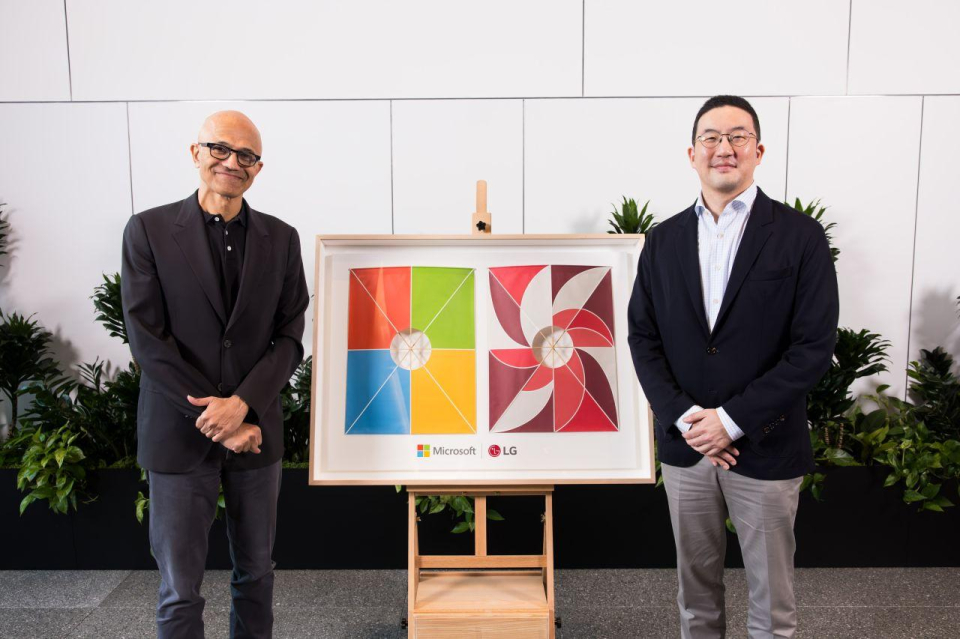
Recently, Koo met with Microsoft CEO Satya Nadella and other senior executives at Microsoft’s headquarters in Redmond, Washington, on Oct. 21 local time. The two companies agreed to expand their strategic partnership across three areas: AI data center infrastructure, enterprise AI transformation and physical AI.
In AI data centers, the companies will explore business opportunities to supply LG’s cooling, power and IT infrastructure solutions in line with Microsoft’s global data center expansion plans.
The initiative reflects the growing importance of infrastructure beyond computing chips and servers. As AI workloads become more intensive, data centers require greater power capacity and more advanced thermal management systems to maintain operational stability and improve energy efficiency.
LG believes its broad portfolio of businesses will allow it to respond to these requirements by bringing together technologies and solutions from multiple affiliates rather than approaching each infrastructure component as a standalone product.
The partnership will also cover enterprise AI transformation. LG plans to introduce Microsoft’s AI and cloud platforms, including Copilot, to office workers across the group. The initiative is intended to improve productivity by applying AI to routine tasks such as document preparation, information retrieval and data analysis.
In physical AI, the companies will explore the use of Microsoft’s high-performance cloud infrastructure to develop and train AI models for real-world industrial applications, including manufacturing, logistics and mobility.
Physical AI combines AI models with robots and other machines that perceive and interact with the physical world. Its development requires substantial computing resources, extensive training data and infrastructure capable of supporting complex simulations and model training.
By combining LG’s industrial and manufacturing capabilities with Microsoft’s cloud infrastructure, the companies aim to identify opportunities to accelerate the development and deployment of AI in industrial environments.
The latest agreement builds on earlier cooperation. In December last year, five LG affiliates — LG Electronics, LG Innotek, LG Energy Solution, LG Uplus and LG CNS — visited Microsoft’s headquarters to showcase technologies related to AI data centers at an event known as the AIDC Tech Show. The companies continued working-level discussions over the following months before expanding their cooperation at the group level.
<>LG Electronics Secures Nvidia Approval for 2.5-Megawatt Cooling System
LG is also deepening its relationship with Nvidia, a central player in the global AI computing ecosystem.
Koo met Nvidia CEO Jensen Huang in June and held a meeting with senior executives. In August, he signed a memorandum of understanding at Nvidia’s headquarters in Santa Clara, California, to pursue strategic business cooperation in robotics, AI factories and mobility.
The collaboration is increasingly reflected in the activities of LG’s individual affiliates.
LG Electronics announced that Nvidia had approved its 2.5-megawatt cooling distribution unit (CDU) for use in AI factory infrastructure. The approval falls under Nvidia’s “DSX Ready” program, which recognizes products that meet requirements for its AI factory ecosystem.
A CDU distributes and manages cooling liquid used to remove heat generated by high-performance computing equipment. As AI servers become more powerful and rack densities increase, liquid cooling is gaining importance as a means of managing heat more efficiently than conventional air-cooling systems alone.
LG Electronics previously received Nvidia approvals for its 600-kilowatt CDU in July and its 1-megawatt model in September. Approval of the 2.5-megawatt unit expands its portfolio of products designed for high-capacity AI infrastructure.
The development also represents an extension of LG Electronics’ established heating, ventilation and air-conditioning expertise into the rapidly growing AI data center market.
As AI computing demand rises, cooling performance is becoming a key consideration in data center design. Efficient thermal management can help operators maintain system reliability while controlling energy consumption and operating costs.
The Nvidia approval provides LG Electronics with a stronger basis for competing in this market. However, product qualification does not itself guarantee commercial orders or revenue. The scale of future business will depend on adoption by data center operators, project requirements and subsequent supply agreements.
<>LG Energy Solution Joins Nvidia’s AI Factory Ecosystem With Energy Storage Technology
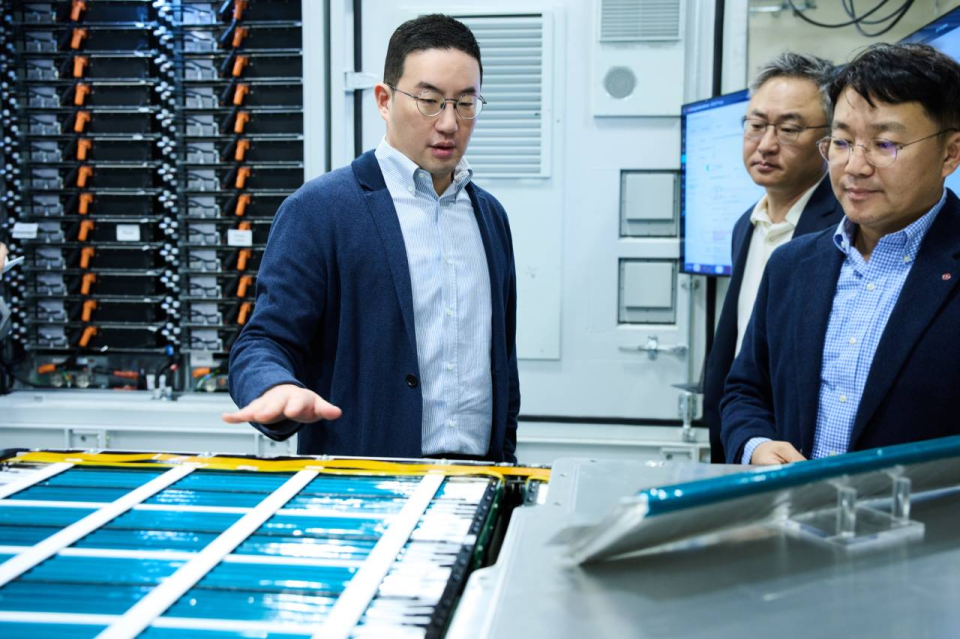
LG Energy Solution is expanding the group’s presence in AI infrastructure through battery-based energy storage.
The company has been selected as a partner for Nvidia’s DSX Ready battery energy storage system (BESS) program, becoming the only South Korean battery manufacturer selected for the ecosystem, according to LG.
The approved product is the JF2 AC Link, a high-capacity lithium iron phosphate (LFP)-based energy storage solution. LFP batteries are widely used in stationary storage applications because of their durability, long cycle life and cost competitiveness.
Energy storage systems can play an important role in data center power management by storing electricity and supplying it when needed. As AI facilities require increasingly large and stable power supplies, BESS technology offers operators an additional tool for managing fluctuations in electricity demand and improving operational flexibility.
The partnership could create new opportunities for LG Energy Solution beyond its traditional electric vehicle battery business. Growing investment in AI infrastructure is expected to increase demand not only for computing equipment but also for supporting energy systems capable of delivering reliable power at scale.
For LG Energy Solution, Nvidia’s qualification provides an entry point into a strategically important ecosystem. Actual commercial results, however, will depend on the adoption of its products in individual projects, customer investment decisions and the terms of future supply contracts.
Together, LG Electronics’ cooling technology and LG Energy Solution’s storage capabilities illustrate how the group is positioning multiple affiliates to address different infrastructure requirements within the same AI data center market.
<>‘One LG’ Seeks to Turn Individual Technologies Into Integrated Solutions
Industry observers expect the expansion of global AI infrastructure investment to increase demand for suppliers capable of coordinating multiple systems, rather than providing isolated components.
An AI data center requires a combination of high-performance computing equipment, power infrastructure, cooling systems, networking and IT services. These elements must operate together to support demanding workloads while maintaining efficiency and reliability.
LG’s portfolio gives it the potential to address several of these requirements through a coordinated approach.
LG Electronics brings cooling and HVAC expertise, LG Energy Solution contributes battery and energy storage technology, and LG CNS provides IT infrastructure and systems integration capabilities. Other affiliates, including LG Innotek and LG Uplus, may also contribute through their respective technologies and businesses.
By coordinating these capabilities, LG aims to strengthen its position as a broader AI infrastructure solutions provider rather than competing solely as a supplier of individual products.
The approach could also help the group engage more effectively with global technology companies whose AI infrastructure projects require multiple categories of equipment and services.
Microsoft and Nvidia offer different but complementary opportunities. Microsoft’s partnership with LG spans cloud infrastructure, enterprise AI adoption and industrial AI development. Nvidia’s ecosystem provides a route for LG’s cooling and energy storage products to be considered for AI factory deployments.
The combination gives LG opportunities to participate across several layers of the AI value chain, from the infrastructure that supports computing to the systems that manage its power and heat requirements.
Nevertheless, the commercial impact will depend on LG’s ability to convert technical qualifications and strategic partnerships into project wins, supply agreements and recurring revenue.
<>Koo Takes a Direct Role in Building Global AI Partnerships
Koo has increasingly engaged directly with executives at major global AI companies, seeking to establish group-wide relationships that can create opportunities for LG’s affiliates.
The latest agreement with Microsoft reflects this approach, bringing together infrastructure, enterprise software adoption and industrial AI under a broader strategic framework.
For LG, the challenge is no longer limited to developing competitive individual products. The group must also integrate its technologies, secure positions within global technology ecosystems and deliver solutions that address customers’ infrastructure requirements as a whole.
The “One LG” strategy is designed to connect these capabilities across corporate boundaries and strengthen the group’s ability to respond to emerging market demand.
As investment in AI computing infrastructure continues to reshape the technology industry, cooling efficiency, power reliability and energy management are becoming increasingly important alongside semiconductor performance.
LG’s expanding partnerships with Microsoft and Nvidia offer a potential route to capitalize on these trends. Whether they translate into a material new growth engine will depend on the pace of commercial adoption and the group’s ability to turn collaboration into measurable business results.
For Koo, the priority is to ensure that LG’s diverse businesses operate as a coordinated force in the global AI market, transforming the group’s broad industrial capabilities into a competitive advantage in the next phase of AI infrastructure development.
