



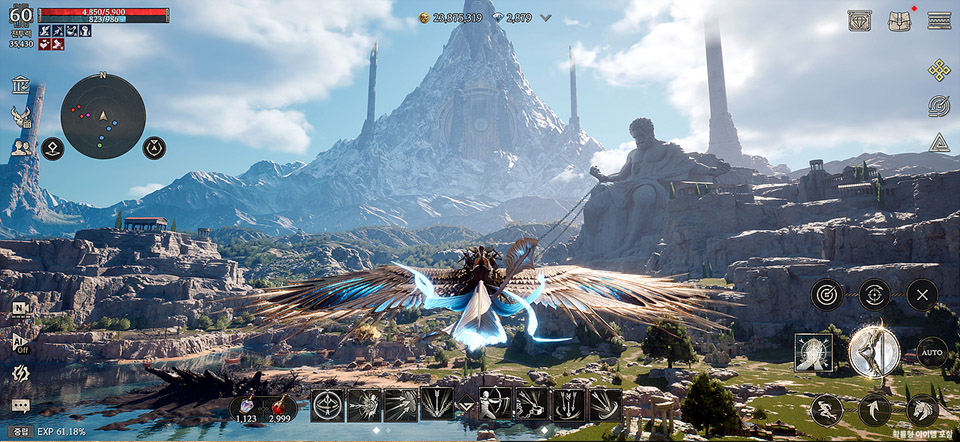
A new MMORPG built around Greek mythology expands competition beyond top-ranked players, combining AI-driven PvP, offline progression and a player-centered economy
Com2uS is preparing to launch “Zeus: God of Arrogance,” a new MMORPG developed by Everton, in South Korea on Aug. 26 at noon, introducing a competitive structure designed to give players multiple ways to progress and participate rather than concentrating competition around a small group of top-ranked users.
Built with Unreal Engine 5, the game reinterprets Greek mythology while combining large-scale PvP, AI-assisted competition, offline progression and a player-driven economy. At the center of its design is a simple question: Can a competitive MMORPG remain engaging even for players who are not at the top of the rankings?
Rather than removing competition, “Zeus: God of Arrogance” attempts to broaden it. Players can choose between direct combat, AI-based competition, guild activities, production and trading depending on their progression level and preferred style of play.
A Greek Mythology-Inspired World Built in Unreal Engine 5
The game takes place in “Theia,” a world where gods, demigods, humans and monsters coexist. Following the Olympian gods’ victory over Cronus and the Titans, the defeated forces remain sealed rather than destroyed. Players enter this world as beings between gods and humans and undergo a series of trials to become the strongest “vessel of the gods.”
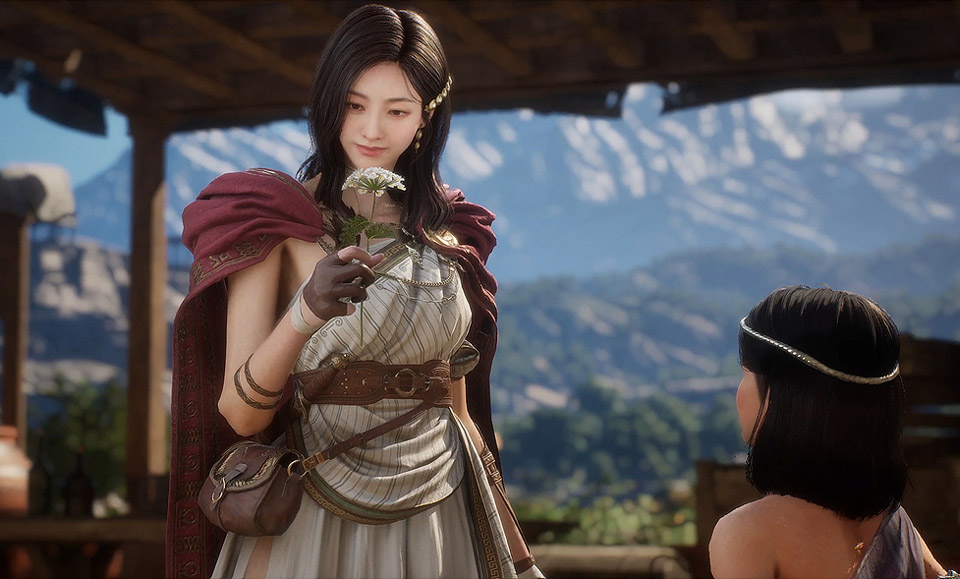
Pandora serves as one of the central NPCs guiding players through the story and connecting them with the gods. Korean actress Park Ji-hyun provided her appearance and performance, which were recreated in the game through facial scanning and voice recording.
Hermes, the messenger of the gods, also guides players on their journey.
Greek mythology extends beyond the narrative into the class and combat systems. Each class is associated with the blessing of a particular god, while skills and combat actions reflect the characteristics and powers of those deities.
Regions including Thebes, Thessalia and Zahab feature contrasting environments ranging from Mediterranean landscapes and agricultural plains to deserts and oases, rendered using Unreal Engine 5.
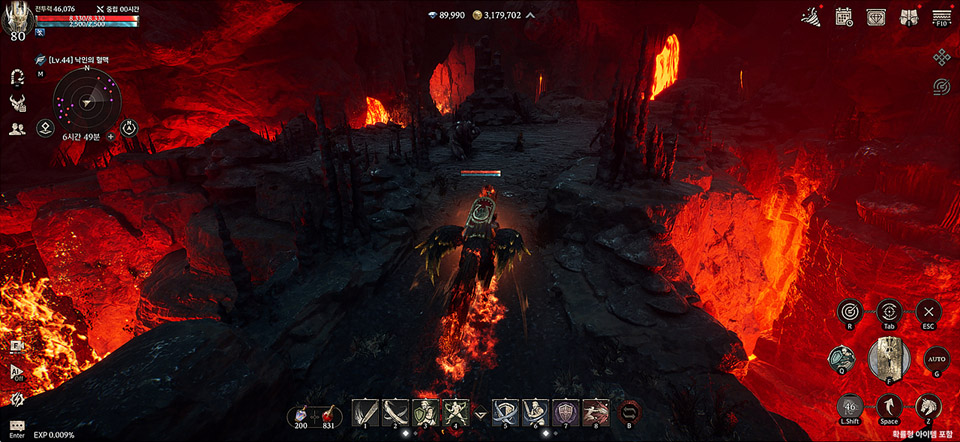
AI Personas Add an Alternative to Real-Time PvP
One of the game's central systems is “Odysseia,” a collection of competitive content spanning individual and guild-based PvE and PvP.
In the Colosseum, players fight one-on-one against “Persona,” AI-controlled characters that reproduce another player's appearance and combat capabilities. Because the opponent does not need to be online, users can compete whenever they choose without relying entirely on real-time matchmaking.
The Persona system also extends to “Arcadia Festival,” a guild competition built around team-based battles. Guilds can strengthen their competitive position during a season through hunting and other activities, earning dedicated effects and guild skills that can later be used in battle.
For players seeking direct competition, the game also offers field bosses, inter-server battlefields, territory occupation and large-scale battles ranging from occupation wars to fortress and siege warfare.
The combination is intended to let players decide how aggressively they want to compete rather than forcing everyone into the same PvP structure.
Eight Classes — Including One Built Around the Economy
“Zeus: God of Arrogance” begins with four basic classes — Warrior, Rogue, Mage and Paragon — which branch into eight advanced classes.
Warriors blessed by Apollo can advance into Knight or Berserker, while Artemis-linked Rogues can become Assassin or Ranger. Mages under Athena's blessing develop into Elementalist or Oracle.
Paragon, associated with Hephaestus, takes a different path, branching into Blessed or Artisan.
Artisan is particularly notable because it is designed around production and economic activity rather than conventional combat alone. Players can develop dedicated crafting skills, produce materials and items required by other users and supply them through the marketplace.
That gives players another way to establish a role in the game world without making combat power the only measure of progression.
AI Mode Keeps Characters Progressing Offline
Another major feature is “AI Mode,” which allows characters to continue hunting and progressing according to predetermined settings even when players are not actively connected.
Users can configure hunting grounds, locations and schedules, while the system can resume automatically following client shutdowns or server maintenance.
Players can also check their character's activity and manage shops, the marketplace, inventory and skill settings while AI Mode is operating.
The system becomes more unusual when combined with guild play. Through a “recruitment” feature, guild members whose characters are progressing in AI Mode can be brought into guild content.
The design separates repetitive progression from activities where direct player participation carries greater importance, reducing some of the time burden traditionally associated with MMORPG character growth.
Artisan and an Inter-Server Marketplace Expand the Economy
The game's economic structure is designed to connect item acquisition, crafting, trading and character progression.
An inter-server marketplace links three servers, expanding the potential trading pool beyond a single server economy. Artisan players can manufacture materials and items and sell them to other users, becoming suppliers within that economy.
Another system, “Midas' Vault,” allows the game itself to purchase designated items from players in exchange for diamonds.
Together, Artisan, the integrated marketplace and Midas' Vault create multiple routes through which items can move from acquisition and production into trade and consumption before feeding back into progression.
The approach also gives non-combat-focused players a potential role in the broader server economy.
The Real Test Comes After Launch
What makes “Zeus: God of Arrogance” interesting is not that it abandons the familiar competitive MMORPG structure. Instead, it attempts to redistribute where competition takes place.
Large-scale battles and high-level PvP remain, but they sit alongside AI-based competition, crafting, trading, guild participation and offline progression. The eight-class system similarly creates different roles rather than pushing every character toward the same definition of power.
That could address one of the persistent challenges facing competitive MMORPGs: the widening gap between highly invested players and the broader player base as a server matures.
Whether Persona battles, AI Mode and the Artisan-centered economy can maintain meaningful interaction without weakening the value of direct competition will ultimately depend on how the systems operate after launch.
“Zeus: God of Arrogance” is scheduled to begin official service at noon on Aug. 26. For Com2uS and developer Everton, the key question will be whether a game designed around multiple paths to competition can turn those choices into a sustainable MMORPG ecosystem.
