



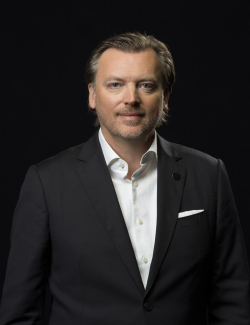
As AI infrastructure expands, the availability of the physical materials needed to build data centres and power networks is becoming an increasingly important consideration. In this written interview with Korea IT Times, Liechtenstein-based entrepreneur Monty C.M. Metzger, founder of Toto Finance, argues that copper supply and financing deserve greater attention in discussions about AI’s future. He outlines how commodity tokenization could connect producers, investors and industrial buyers, while acknowledging that Toto Finance has not yet announced a copper financing or delivery.
The following Q&A examines copper supply constraints, the opportunities and risks of tokenization, and the implications for Korean industry.
1. What evidence shows copper availability is already affecting AI infrastructure projects? How much additional copper demand comes specifically from AI and data centres, compared with broader electrification?
The bigger story is not just AI. The world is entering a period of extraordinary copper demand. By some industry estimates, humanity may need as much copper over the next 20 years as it has produced over the past 10,000 years.
For South Korea, this matters enormously. Korea's economy is built on industries that depend on reliable access to power and critical materials, from semiconductors and electronics to batteries, automobiles, shipbuilding, defence technology and now AI infrastructure. A large AI data centre can require tens of tonnes of copper for every megawatt of capacity, while the energy transition and defence industries add even more demand. I call this the Copper Crunch.
The problem is not that the copper does not exist. The problem is getting it out of the ground, financed and into the hands of industrial buyers. New mines can take nearly two decades to develop, while commodity trading and financing remain concentrated, slow and dominated by incumbent structures. Much of this industry is still operating with processes built for the last century.
AI adds another layer of pressure. S&P Global expects global data-centre capacity to grow from about 100 GW in 2022 to roughly 550 GW by 2040, with copper demand from data centres rising from around 1.1 million tonnes in 2025 to 2.5 million tonnes in 2040. Overall copper demand could rise by about 50%, creating a potential supply shortfall of around 10 million tonnes.
This is where I believe the industry is ready for its digital moment. Blockchain can create a more transparent way to finance, own and trade physical commodities and connect producers more directly with industrial buyers. That is why I founded Toto Finance. We are building a digital Mine to Market network designed to make copper easier to finance, trade and ultimately deliver to the industries that need it.
2. Where are the most serious constraints—mining, refining, manufacturing or delivery—and how could they affect project costs and timelines over the next three to five years?
The deepest constraint is mining because new supply cannot be created quickly. The IEA says average copper ore grades have fallen by about 40% since 1991, while the capital intensity of brownfield expansions has risen 65% since 2020. A new copper mine can take around 17 years from discovery to production. That is completely out of sync with the speed at which AI infrastructure and electrification are being built.
In the shorter term, manufacturing is where companies often feel the pain. Refined copper still has to become wire, cable, transformers, busbars, motors and other electrical components. So a buyer can theoretically find copper on a spot market and still wait a long time for the equipment it actually needs.
This mismatch between demand moving at technology speed and new mine supply moving at mining speed is the real problem. We cannot compress geology, but we can modernise how projects are financed and how future supply is contracted, traded and delivered. That is where Toto Finance sees an opportunity.
3. How can tokenization help bring additional copper into production? What does it improve compared with conventional project financing or long-term purchase agreements, and which constraints remain?
We start with something very tangible: Copper Now. Toto Finance is launching tokenized copper—physical, refined LME Grade A copper cathodes held in approved warehouses. Each token represents direct ownership of physical copper, with provenance back to the originating mine and the ability to redeem it for the actual metal. This brings something the traditional commodity market often lacks: a transparent digital record of where the copper came from, who owns it and how it moves through the supply chain.
From there, the same infrastructure can extend to future production. A mining company with verified reserves needs capital years before the copper reaches the market. Tokenization can connect that future production more directly with capital and industrial buyers, creating a new financing route alongside banks, commodity traders and traditional offtake agreements.
I often compare the opportunity to Uber and Airbnb. Uber created a global mobility network without owning the cars. Airbnb created a global accommodation network without owning the hotels. Toto Finance wants to build a global commodity network without owning the mines. We call it Mine to Market. Blockchain provides the ownership, provenance and settlement infrastructure connecting the mine, the capital and ultimately the industrial buyer.
For South Korea, this is bigger than financial innovation. Reliable access to copper and other critical commodities is increasingly a question of economic sovereignty. The goal is not tokenization for its own sake. It is to give Korean industry a more direct, transparent and secure way to source the physical resources it needs to compete.
4. What has Toto Finance's copper business achieved so far? Please share a named project or partner, its stage of development, financing raised and any copper produced or delivered. How does copper fit into your existing commodities business?
We spent the last two years building the technology before going after the larger opportunity. Our proprietary blockchain platform has already been proven with physical assets including diamonds, gold, silver and platinum, covering tokenization, ownership, trading and physical redemption.
Earlier this year, we consolidated that technology and IP into Toto Finance, our new US company, and moved from proof of concept into a B2B commodity strategy. Copper is the first market because the need is urgent, the market is global and the potential scale is enormous.
We are now working with mining companies and commodity partners on the first copper transactions. I recently sat down with Robert Friedland, founder of Ivanhoe Mines and one of the world's most influential mining billionaires, to discuss how copper can move through a more direct, digital Mine to Market model.
We have not yet announced a copper financing or delivery. The next milestone is clear: bring the first physical copper onto the platform, prove the model at industrial scale, and then expand that infrastructure across the commodity market.
5. How do the rights and risks differ between tokens representing underground reserves, future production, and stored copper? Who independently verifies the assets, and what happens if production or delivery fails?
I see three waves of tokenization: Money, Markets and Matter. Bitcoin and stablecoins digitized money. Then financial markets started moving on-chain. Now comes Matter, where blockchain represents ownership of the physical assets the world actually needs.
The scale is enormous. Crypto today is around $3 trillion, while gold alone is roughly a $31 trillion market. Yet only around $5 billion of gold is tokenized, less than 0.02%. A recent a16z crypto analysis shows just how early this transition still is.
Matter requires a higher standard. A token has to be tied to independently verified assets and enforceable legal rights. Stored metal can be verified through title records, warehouse documentation, insurance and physical inspection. Future production requires verified production rights, technical reports and contracts that define exactly what the holder owns and when delivery is due.
We work with experienced mining companies that understand geology and production. Our role is to add the digital ownership, provenance and financing infrastructure around those assets.
This is where blockchain becomes truly useful. It can create a permanent record of origin, ownership and transfer, while the legal structure defines what happens if delivery is delayed or obligations are not met. That combination is what can bring trillions of dollars of physical commodities into the digital economy.
6. What practical steps should Korean data-centre operators, cable manufacturers and industrial buyers consider to secure supply? Where could recycling, material substitution or direct producer partnerships help?
South Korea is already an important copper hub, with LME-approved warehouse locations in Busan, Gwangyang and Incheon. But copper sitting in Korea does not mean Korean industry owns it or has guaranteed access to it. That is the strategic issue.
Korean companies should therefore secure supply earlier and further upstream. That means diversifying sources, building direct relationships with mines, locking in future production and using recycling wherever it is economically viable. Substitution can help in selected applications, but it cannot replace the volumes of primary copper needed for AI, grids, defence and advanced manufacturing.
This is where Toto Finance fits. We are building a digital commodity network that connects mines, capital and industrial buyers more directly. Blockchain can provide a transparent record of ownership, provenance and transfer, while tokenization can help Korean buyers secure exposure to physical copper and future production before supply becomes constrained.
For Korea, the opportunity is to move from being a copper logistics hub to having greater control over supply. Toto Finance wants to provide the digital infrastructure for that shift, creating a more direct route from mine to Korean industry.
I explore this broader shift in my new book, Tokenization: Capital for Humanity, which also presents my views on commodities, tokenization and the digital economy.
