



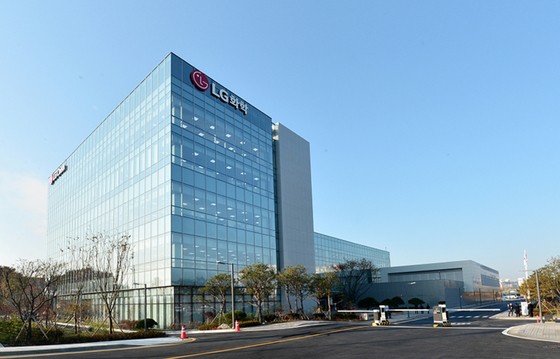
LG Chem is accelerating its efforts to secure next-generation sustainable aviation fuel (e-SAF) technology by participating in a large-scale national project aimed at converting captured carbon dioxide into eco-friendly aviation fuel.
The company announced that it will lead a demonstration project under South Korea’s Carbon Capture and Utilization (CCU) Mega Project, an initiative backed by the Ministry of Science and ICT. The program seeks to commercialize technologies that transform captured carbon emissions into valuable industrial resources.
As the lead organization, LG Chem will collaborate with a consortium that includes Hyundai Engineering & Construction, LT Metal, Procon Engineering, the Korea Institute of Science and Technology (KIST), the Korea Institute of Energy Research, the Korea Petroleum Quality & Distribution Authority, Ulsan National Institute of Science and Technology (UNIST), Kunsan National University, and the Chungcheongnam-do provincial government. The project is scheduled to run through 2030.
Under the initiative, LG Chem plans to demonstrate a production process that combines captured carbon dioxide with green hydrogen to create synthetic fuel. The fuel will then undergo refining and upgrading processes to produce e-SAF, a synthetic form of sustainable aviation fuel.
Industry experts view e-SAF as one of the most promising solutions for reducing carbon emissions from air transportation. Unlike conventional jet fuel derived from fossil resources, e-SAF is produced using captured carbon dioxide and renewable hydrogen, significantly lowering lifecycle greenhouse gas emissions.
The project comes as governments worldwide strengthen policies to increase the use of sustainable aviation fuels. The European Union aims to raise SAF blending requirements to 70% by 2050, with synthetic fuels expected to account for a substantial share of that target. The United Kingdom has also outlined plans to expand SAF usage by 2040, while countries including Japan, Singapore, and India are introducing measures to support broader adoption.
South Korea is also moving forward with its own aviation decarbonization strategy. The government plans to introduce a mandatory 1% SAF blending requirement beginning in 2027, with the ratio expected to increase to between 7% and 10% by 2035.
Market observers believe that successful commercialization of e-SAF technology could create new growth opportunities for the domestic clean-energy industry while helping airlines meet increasingly stringent carbon reduction targets.
Through the demonstration project, LG Chem aims to advance carbon utilization technologies, improve production efficiency, and strengthen its position in the rapidly growing global market for sustainable aviation fuels. The initiative is also expected to contribute to broader efforts to establish a circular carbon economy by transforming captured emissions into valuable energy resources.
