



High-efficiency facilities designed to cut carbon emissions by more than 20% from initial design
Ethylene and propylene to be supplied to downstream companies through pipelines in Ulsan industrial complex
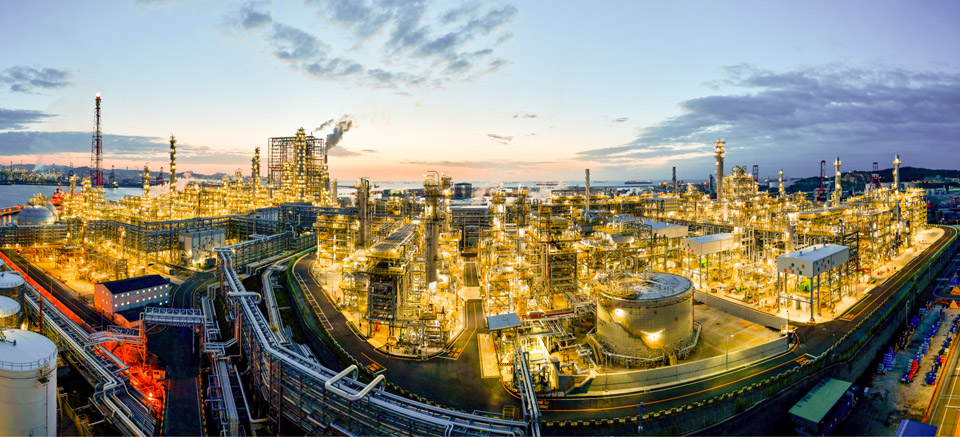
S-OIL said on Aug. 18 that its Shaheen Project in Ulsan, South Korea, is designed to establish a cost-competitive and energy-efficient petrochemical production base with greater feedstock flexibility as the company responds to intensifying competition from China and the Middle East.
The project represents a major expansion of S-OIL's refining-to-chemicals strategy, integrating advanced petrochemical facilities with its existing refining operations in Ulsan.
At the center of the project is Thermal Crude to Chemicals, or TC2C, a technology that converts crude oil and low-value streams from the refining process into petrochemical feedstocks. S-OIL said the Shaheen Project will mark the world's first commercial-scale application of the technology.
The company is combining TC2C with a high-efficiency steam cracker, power generation facilities, waste heat recovery and process optimization technologies to improve both feedstock and energy efficiency.
Additional design improvements are expected to reduce carbon emissions by more than 20% compared with the project's original design, according to S-OIL.
The company expects the combination of advanced technology and integrated operations to strengthen production economics while reducing energy consumption and carbon intensity.
Feedstock flexibility is another key element of the project.
By integrating refining and petrochemical operations, S-OIL aims to reduce dependence on individual feedstocks and adjust its feedstock mix in response to market conditions.
Such flexibility has become increasingly important as geopolitical risks and potential disruptions to naphtha supplies highlight vulnerabilities in global petrochemical supply chains.
An integrated refining and petrochemical complex can provide greater flexibility in responding to fluctuations in feedstock prices and availability, helping improve both cost competitiveness and supply resilience.
The Shaheen Project is also expected to have an impact beyond S-OIL's own operations.
Ethylene, propylene and other basic petrochemicals produced by the new facilities will partly be supplied to downstream companies within the Ulsan National Industrial Complex through dedicated pipeline networks.
Ulsan currently relies on external sources for part of its basic petrochemical requirements. Local production and pipeline-based distribution could reduce logistics requirements while improving the stability of feedstock supplies to nearby manufacturers.
S-OIL expects the system to strengthen the broader petrochemical value chain in Ulsan by more closely connecting basic chemical production with downstream manufacturing.
The Ulsan Research Institute, a policy research organization funded by the Ulsan city government, has also highlighted the project's potential impact on the regional economy.
In a recent report, the institute said the Shaheen Project could help transform Ulsan from a traditional refining center into a global hub for higher-value chemical materials while strengthening the competitiveness of the regional industrial ecosystem through its pipeline infrastructure.
S-OIL argues that a competitive basic petrochemical production base will remain essential even as South Korea's petrochemical industry shifts toward higher-value and specialty products.
Specialty chemicals ultimately depend on upstream feedstocks such as ethylene and propylene. If those materials cannot be produced at globally competitive costs, downstream products can also face disadvantages in international markets.
The issue has become more pressing as China and Middle Eastern countries continue investing in large-scale integrated refining and petrochemical facilities.
Crude Oil-to-Chemicals, or COTC, projects that convert crude directly into petrochemical products are expanding internationally, increasing competitive pressure on traditional petrochemical producers.
For South Korea, maintaining an efficient domestic production base while moving toward higher-value products has therefore become a key industry challenge.
S-OIL said industry restructuring should involve not only reductions in less competitive capacity but also investment in efficient facilities, lower-carbon production, higher-value products and more resilient supply chains.
"The Shaheen Project is a long-term investment that has been pursued for several years in line with efforts to strengthen industrial competitiveness and promote investment in advanced, high-efficiency facilities," S-OIL said.
"Through the successful completion and stable operation of the project, we will make a meaningful contribution to helping South Korea's petrochemical industry secure sustainable competitiveness in the global market."
As Asian petrochemical producers face persistent pressure from new capacity in China and the Middle East, the Shaheen Project will provide an important test of whether advanced technology, feedstock flexibility and refining-petrochemical integration can give South Korean production facilities a stronger cost position in the global market.
