



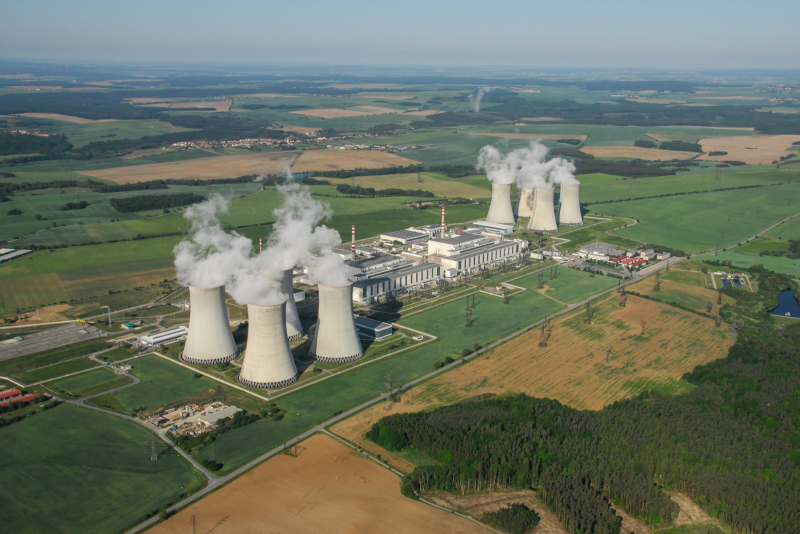
Korea Hydro & Nuclear Power (KHNP) has cleared a major regulatory hurdle in its pursuit of the Czech Republic’s new nuclear power project after the European Commission (EC) concluded its preliminary review under the European Union’s Foreign Subsidies Regulation (FSR) without launching a formal in-depth investigation.
KHNP announced that it received official notification from the EC on June 5 stating that the Commission would not proceed with a detailed investigation into the Dukovany nuclear power plant project under the FSR framework.
The decision is widely viewed as a significant step forward for the project, removing one of the key uncertainties surrounding the implementation of the contract and paving the way for smoother project execution.
The Foreign Subsidies Regulation, which came into force in 2023, allows the European Union to examine whether financial contributions provided by non-EU governments give companies an unfair competitive advantage in the European market. If concerns are identified, the Commission can launch an in-depth investigation and potentially impose corrective measures.
The Czech nuclear project had been subject to a preliminary review since February 2025, when the Commission initiated an ex officio assessment of KHNP and Team Korea. The review focused on whether any state-backed financial support associated with the Korean consortium could distort competition within the EU market.
Throughout the process, KHNP and its partners cooperated with the Commission by providing relevant documents and detailed explanations regarding the project's financing structure, bidding process, and business arrangements.
Following more than a year of examination, the EC determined that there were insufficient grounds to open a formal investigation, effectively concluding the regulatory review process.
Industry experts say the outcome represents a major positive development for KHNP. Had the Commission decided to launch a full investigation, the project could have faced lengthy delays and additional scrutiny, potentially affecting construction schedules and contractual commitments.
The Dukovany project is one of the largest energy infrastructure investments in the Czech Republic and is considered a cornerstone of the country's long-term energy security and decarbonization strategy. The expansion is expected to play a crucial role in replacing aging power generation assets while supporting the country's transition toward low-carbon electricity production.
KHNP emerged as the preferred bidder for the project after competing against major international nuclear vendors, including France's EDF. Industry observers have credited the Korean consortium's competitiveness to its combination of proven reactor technology, cost efficiency, construction experience, and track record in delivering large-scale nuclear projects.
The European Commission's decision is also expected to strengthen South Korea's broader nuclear export ambitions. Analysts note that the successful navigation of the EU's regulatory framework could enhance confidence in Korean nuclear technology as several European countries continue to evaluate new nuclear construction projects.
KHNP said it will continue working closely with Czech authorities and the project owner to ensure the smooth implementation of the Dukovany expansion project. The company is expected to focus on advancing detailed planning and project execution while leveraging the capabilities of South Korea's broader nuclear industry ecosystem.
Industry officials believe the latest development not only improves the outlook for the Czech project but also reinforces South Korea's position as a leading supplier in the increasingly competitive global nuclear power market.
