



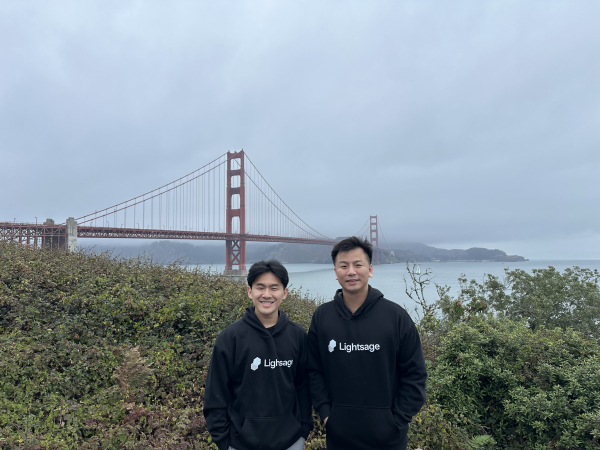
Lightsage, a San Francisco-based artificial intelligence startup, said on September 8 that it has raised $4 million to help software companies understand how AI agents discover, evaluate and use their products.
Nexus Venture Partners led the seed round. Other investors include former Salesforce Chief Technology Officer Steven Tamm, Postman CEO Abhinav Asthana, Apollo CEO Matt Curl and DocuSign President and General Manager of Growth Robert Chatwani, along with executives from several AI and developer-tool companies.
Lightsage calls its approach “Agent-Led Growth.” The company expects AI agents to play a growing role in selecting databases, payment services, authentication providers and other software on behalf of users.
Software adoption shifts from clicks to completed tasks
Software companies have traditionally tracked customer acquisition through searches, website visits, demonstrations and sign-ups. Coding agents such as Claude Code, Codex, Cursor and GitHub Copilot can now identify products, read documentation, install software development kits and connect to application programming interfaces without following those conventional paths.
This changes how software companies compete. Appearing in an AI recommendation may attract attention, but adoption depends on whether an agent can understand the documentation, select the correct tools, authenticate and complete its task.
Lightsage focuses on this process after discovery. Its platform runs simulations in which coding agents perform practical tasks using application programming interfaces, software development kits, command-line tools, Model Context Protocol servers and agent skills.
When a task fails, the platform identifies possible causes such as unclear documentation, authentication problems, faulty endpoints or incompatible development tools. Companies can correct the problem, run the task again and measure whether performance improves.
“We are moving from an internet where AI tells people which software to use to one where AI increasingly uses the software itself,” said Jun Liang Lee, co-founder and CEO of Lightsage. “Visibility still matters, but the real test is whether an agent can understand your product and get to a successful outcome.”
Measuring a customer journey without conventional clicks
Lightsage also analyzes agent-generated traffic to websites and technical documentation. It tracks what agents access, where they encounter problems and whether their activity results in successful product use.
This behavior can be difficult to measure with conventional marketing tools. An agent may find, compare and operate a product without producing the familiar sequence of searches, advertisements, clicks and sign-ups.
Different agents may also approach the same product in different ways. Their behavior can change as underlying models, interfaces and development environments are updated, requiring companies to test important workflows repeatedly.
Lightsage uses the term “Agent Experience” to describe how easily an AI agent can understand and operate a product. The company expects it to become an important consideration for software providers, similar to the role developer experience has played in the adoption of application programming interfaces and development platforms.
The platform currently supports Claude Code, Codex, Cursor, GitHub Copilot and OpenCode. Early customers include Firecrawl, Reducto, Daytona, Rime and Tinyfish.
A typical evaluation examines why an agent recommends one product over another. Lightsage reproduces comparable tasks to determine whether the difference comes from discoverability, documentation or the product itself.
Abhishek Sharma, a partner at Nexus Venture Partners, said AI agents are beginning to discover, evaluate and act on behalf of users. He said Lightsage is building the infrastructure companies will need to improve agent conversion as well as visibility.
Lightsage plans to use the funding to expand its evaluation, analytics, attribution and optimization capabilities and to hire across technical and commercial roles. It is initially concentrating on developer software, with plans to expand into business applications, digital infrastructure, e-commerce and payments as agents take on more transactions and operational tasks.
