



Daewoong aims to use its medical network to accelerate adoption of digital health technologies in hospitals and clinics
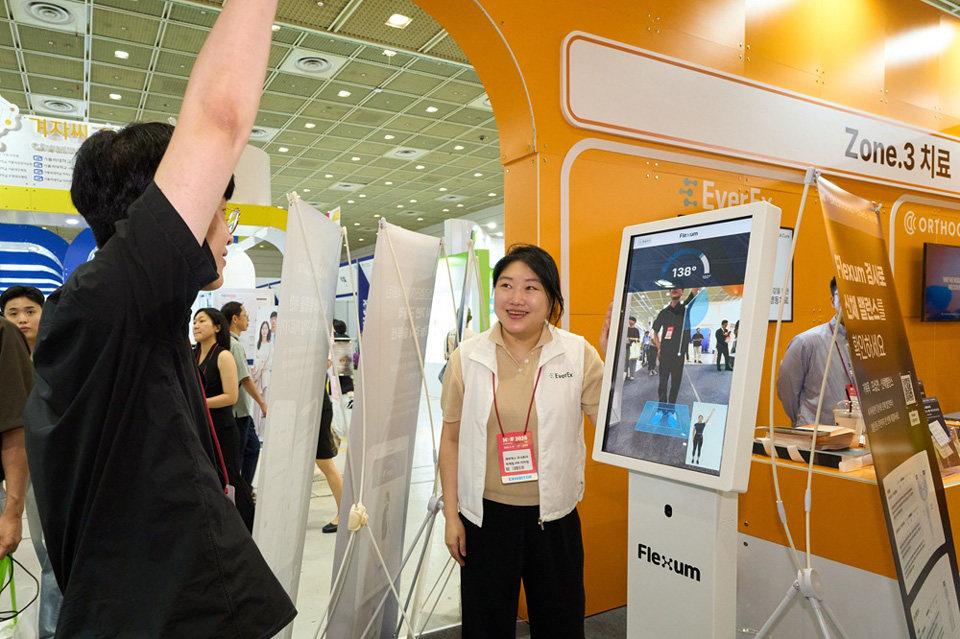
Daewoong Pharmaceutical is expanding beyond its traditional drug business by building a digital healthcare ecosystem that connects 12 Korean health-tech companies across AI diagnostics, wearable devices, digital therapeutics and patient monitoring.
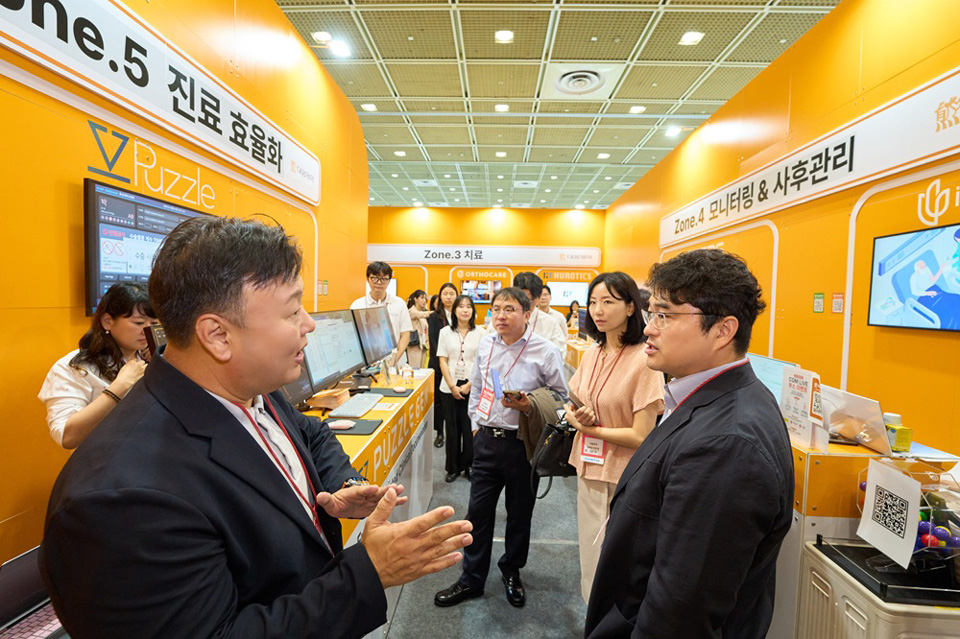
The strategy was put on display at KHF (K-Hospital Health Tech Fair) 2026, held at COEX in Seoul from Aug. 19 to 21, where the company presented its “DAEWOONG Alliance” as a platform designed to connect technologies across the entire patient journey.
Rather than showcasing isolated digital health products, Daewoong organized the exhibition around four stages of healthcare: prevention and prediction, early diagnosis, treatment, and post-treatment monitoring and clinical efficiency.
The approach offers a glimpse into how the South Korean pharmaceutical company sees its future role in healthcare — not only as a developer and supplier of medicines, but increasingly as a connector between technology companies, medical institutions and patients.
KHF 2026 attracted about 23,000 visitors and more than 400 participating companies. Daewoong Alliance operated a 20-booth exhibition area, while 34 expert sessions drew around 700 attendees.
But the more important question is what happens after the exhibition.
From individual products to a connected healthcare ecosystem
South Korea has developed a growing pool of digital health companies specializing in areas ranging from medical AI and wearable sensors to digital therapeutics and hospital automation.
For many of these companies, however, developing the technology is only one part of commercialization.
Getting a solution adopted by hospitals requires clinical validation, access to physicians, integration into existing workflows and a sales and distribution structure capable of supporting deployment across multiple medical institutions.
That is where Daewoong Alliance could become strategically significant.
Instead of developing every technology internally, Daewoong can bring specialized companies into a broader ecosystem and combine their technologies with the pharmaceutical company's existing commercial and medical network.
The model potentially offers benefits on both sides.
Health-tech companies gain access to a larger route into hospitals and clinics, while Daewoong can expand its digital healthcare portfolio without having to build every diagnostic, monitoring or therapeutic platform from scratch.
The real value of the alliance, therefore, may ultimately depend less on how many companies participate and more on how effectively Daewoong can turn their technologies into products routinely used in clinical practice.
AI moves healthcare further upstream
One of the most notable aspects of the alliance is its emphasis on identifying health risks before conventional treatment begins.
The prevention and prediction segment includes Medical AI's AiTiA electrocardiogram analysis technology, ARC's retinal imaging-based screening solutions for major causes of blindness, Promedius' Osteo Signal for assessing osteoporosis risk from chest X-rays, and Exosystems' digital musculoskeletal and biosignal analysis technologies.
The early diagnosis segment includes TR's AI-powered respiratory diagnostic solution The Spirokit and Sky Labs' CART BP pro, a ring-type continuous blood pressure monitoring device.
These technologies represent a broader shift in healthcare.
Traditional pharmaceutical business models have largely focused on what happens after a disease has been diagnosed: prescribing and supplying treatment.
Digital health technologies can move the point of intervention earlier by using medical images, biosignals and continuously generated health data to identify risks before symptoms become severe.
That fits Daewoong's stated vision of “4P healthcare” — Preventive, Predictive, Personalized and Participatory medicine.
Digital healthcare extends beyond diagnosis
Daewoong Alliance also reaches into treatment and long-term patient management.
Hurotics showcased H-Medi, a wearable gait rehabilitation robot, while EverEx and Orthocare presented digital treatment and diagnostic technologies for musculoskeletal disorders.
The monitoring and clinical-efficiency segment included Seers Technology's thynC inpatient monitoring platform, Sky Labs' CART-ON, iKooB's CGM Live real-time continuous glucose monitoring system for hospitals, and Puzzle AI's AI-powered medical documentation technology.
Viewed together, the technologies illustrate a healthcare model in which the patient's relationship with the medical system does not begin with diagnosis and end with a prescription.
Health risks can be identified earlier, treatment can become more personalized, and patients can continue to be monitored after leaving the hospital.
For a pharmaceutical company, that potentially expands the point of contact from a specific drug prescription to a much larger portion of the patient journey.
Daewoong’s biggest advantage may be its medical network
Daewoong does not necessarily need to possess the most advanced technology in every digital healthcare category for this strategy to work.
Its more important asset may be something accumulated through decades in the pharmaceutical business: access to medical institutions.
Digital health startups frequently face a commercialization gap between demonstrating that a technology works and getting physicians and hospitals to use it routinely.
Large pharmaceutical companies already have established relationships across the healthcare system, from major hospitals to local clinics.
If Daewoong can use that network to introduce and scale partner technologies, it could serve as a commercialization platform between Korean health-tech developers and healthcare providers.
That would distinguish the alliance from a conventional portfolio of investments or distribution agreements.
The strategy could also allow Daewoong to identify technologies already proving their value in clinical environments and expand partnerships around those that achieve meaningful adoption.
The next test is adoption, not exhibition
There are still important challenges.
Combining 12 companies under one alliance does not automatically create an integrated digital healthcare platform.
Hospitals have different IT systems and clinical workflows, while medical technologies must demonstrate clinical utility, ease of use and economic value. Data interoperability and the ability to integrate new solutions without increasing the workload of healthcare professionals will also influence adoption.
For that reason, KHF 2026 should be viewed less as the culmination of Daewoong's digital healthcare strategy than as a demonstration of what the company is attempting to build.
Daewoong said it plans to use discussions held with domestic and international hospital representatives during the event to pursue deployment and commercialization opportunities and expand adoption of alliance solutions at major Korean medical institutions.
“The DAEWOONG Alliance successfully demonstrated its vision and capabilities together with partners possessing world-class technologies,” Daewoong Pharmaceutical CEO Lee Chang-jae said. “We aim to lead the development of a data-driven total healthcare ecosystem that connects everyday health data from prediction through post-treatment management.”
The ambition represents a broader change in how pharmaceutical companies can position themselves as healthcare becomes increasingly data-driven.
Medicines will remain central to Daewoong's business. But AI diagnostics, wearables, digital therapeutics and continuous monitoring create opportunities before and after the moment a drug is prescribed.
If Daewoong can successfully connect those technologies to its existing medical network, the DAEWOONG Alliance could evolve from a collection of digital health products into something more strategically valuable: a commercialization platform connecting Korean health-tech innovation with real-world clinical care.
