



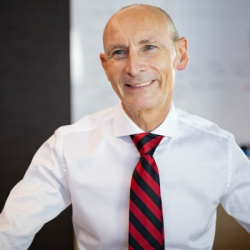
The US Federal Reserve’s first interest-rate increase in three years may be followed by another move before the end of 2026, according to Nigel Green, CEO of independent financial advisory firm deVere Group.
The Federal Open Market Committee voted unanimously on September 16 to raise the federal funds rate by 25 basis points to a target range of 3.75% to 4%. The central bank said economic activity was expanding at a solid pace and the labour market remained stable, while inflation continued to exceed its 2% target.
“A quarter point today was the easy part. The harder question is what comes after it, and the honest answer is more tightening, not less,” Green said. “We believe the Fed delivers a second hike in December, and investors positioning for ‘one and done’ and a return to calm are likely going to be caught out.”
Green attributed the change in the interest-rate outlook to persistent inflation, stronger labour-market data and higher crude oil prices. He said Fed Chair Kevin Warsh’s shift in tone since the Jackson Hole symposium indicated that inflation risks had become more pressing for policymakers.
Fed projections support higher year-end rate
The Fed’s updated economic projections also point to the possibility of further tightening. The median projection for the federal funds rate at the end of 2026 was 4.1%, above the current target-range midpoint of 3.875%.
Twelve of the 18 participating officials projected a year-end rate of 4.125%, a level consistent with one additional quarter-point increase. Four projected 4.375%, suggesting the possibility of two further increases, while two expected the rate to remain near its current level.
The projections represent individual policymakers’ assessments and do not guarantee a December increase. The Fed’s next decisions will depend on inflation, employment, economic activity and the effects of geopolitical developments on energy prices.
The central bank also extended its economic projections through 2029. Its median forecast showed the federal funds rate remaining at 4.1% in 2027 before declining to 3.9% in 2028 and 3.6% in 2029, indicating that policymakers expect monetary conditions to remain relatively restrictive.
Bond duration, dollar exposure and borrowing costs
For investors, another increase would place renewed pressure on long-duration bonds. When market yields rise, the prices of existing fixed-rate bonds generally fall, with longer-dated securities usually experiencing larger price movements.
“Reviewing duration exposure now, rather than after the next move, is the difference between managing this cycle and being managed by it,” Green said.
A higher US interest-rate path could also support the dollar, affecting international investments without currency hedges and increasing repayment costs for companies and governments carrying dollar-denominated debt. The consequences would extend beyond financial markets to mortgages, corporate refinancing and variable-rate business loans.
Businesses and households treating the September decision as the peak of the rate cycle could therefore underestimate future financing costs. The December meeting will test whether the Fed’s latest increase marked a limited policy adjustment or the beginning of a longer tightening phase.
