



Zurich, Switzerland — January 22, 2025 — Sparkli, a Zurich-based education technology startup founded by former Google employees, said it has raised a $5 million pre-seed round to develop a multimodal, AI-based learning platform for children.
The company said the funding will be used to scale its product and prepare for a private beta launch planned for January 2026. Sparkli is also running a pilot program with a large private school group, which it said operates a network of more than 100 schools and serves over 100,000 students. The pilot is intended to evaluate how Sparkli’s platform performs in classroom settings and how teachers and students use it over time.
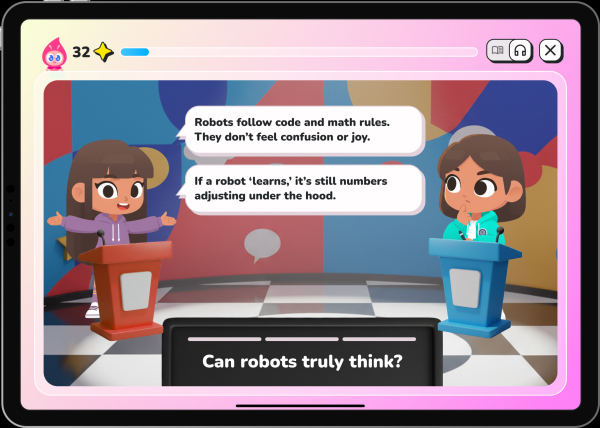
Sparkli positions its product as an alternative to both traditional assignments and open-ended AI chat tools. Rather than producing a text-based answer to a prompt, Sparkli says its system generates interactive “learning expeditions” that combine visuals, voice, and simulations. The goal, according to the company, is to help children move from passive consumption to more active exploration.
The platform is designed around three product priorities, Sparkli said. The first is enabling children to explore topics as they arise rather than relying on fixed curriculum sequences. The second is using multiple formats—including interactive elements—rather than primarily text. The third is emphasizing skills such as creativity and problem-solving, alongside subject knowledge.
Sparkli said its system builds an “interest and knowledge graph” for each user over time to tailor content and difficulty levels. In practice, the company said, if a child asks a question such as how to build a city on Mars, the platform generates a structured activity that can incorporate age-appropriate concepts such as basic physics, environmental constraints, and planning decisions, and then asks the child to justify choices and reflect on trade-offs.
“Our goal is to build agency in the next generation,” said Lax Poojary, Sparkli’s founder and chief executive. He said the product is intended to encourage children to ask questions, test ideas, and revise their thinking, rather than treating AI as a tool for producing finished answers.
In early classroom testing, Sparkli said students have used the platform for projects that simulate real-world scenarios. In one pilot example, the company said eight-year-olds created simple “food cart” business simulations that led to discussions about budgeting and customer experience. In another, Sparkli said students initiated self-directed sessions exploring topics such as game design and cosmology. The company also said some parents testing an early consumer version reported that their children were more engaged in explaining what they learned after using the platform.
Sparkli was founded by Poojary and co-founders who previously worked at Google, including teams such as Area 120, Search, and YouTube, the company said. Sparkli added that its team includes engineers and designers with backgrounds in research institutions such as ETH Zurich and in education-related roles.
The company argues that existing learning materials and many digital education tools can be slow to update and are often organized around fixed content libraries and repetitive drills. At the same time, Sparkli said, general-purpose AI tools may be difficult to use safely with younger children without child-focused design and constraints. Sparkli said its platform is being built with age-appropriate interfaces and guardrails intended to reduce unstructured or inappropriate outputs.
Sparkli’s investors include Founderful, which described the product as an attempt to support curiosity-driven learning through interactive formats rather than passive viewing. “Their traction with schools shows a real appetite for tools that foster curiosity and agency rather than passive consumption,” said Lukas Weder, a partner at Founderful.
Looking ahead, Sparkli said it plans to expand the platform from guided learning activities to creation tools that allow children to build and prototype projects inside the product. The company also said it aims to connect classroom and home use cases, and to adapt the platform as users grow older. Sparkli described its long-term direction as building an AI-based companion that can retain a child’s interests and learning history over multiple years.
Sparkli did not disclose the valuation or additional terms of the financing.
