



Samsung Electronics could be entering a major re-rating phase as expectations for a large-scale shareholder return program coincide with a favorable memory market cycle, according to KB Securities.
The brokerage said the company’s earnings and shareholder value could both improve as the prolonged imbalance between memory supply and demand, driven by the expansion of artificial intelligence (AI) data centers, coincides with a recovery in Samsung’s high-bandwidth memory (HBM) business.
KB Securities on Aug. 10 maintained its “Buy” rating on Samsung Electronics and a target price of KRW 600,000, describing the company’s current share price as an attractive opportunity for aggressive accumulation.
A key catalyst is a new shareholder return policy that Samsung Electronics is expected to announce in the near future. Analysts Kim Dong-won and Lee Chang-min at KB Securities estimate that the company could return between KRW 100 trillion and KRW 200 trillion annually to shareholders.
That would represent a more than 10-fold increase from Samsung Electronics’ existing annual shareholder return of KRW 9.8 trillion, and potentially more than 20 times the current level at the upper end of the estimate.
KB Securities expects such a move to go beyond simply increasing dividends and instead serve as a catalyst for a broader revaluation of Samsung Electronics. A significantly larger return of excess cash flow to shareholders could reduce the valuation discount that has historically been applied to the company and prompt investors to reassess its corporate value.
The earnings outlook is also improving. KB Securities estimates that Samsung Electronics’ third-quarter operating profit could surge 817% year on year to KRW 112 trillion, with an operating margin of 55%. If realized, the company would set a new quarterly profit record for the fourth consecutive quarter since the fourth quarter of last year.
The memory business is expected to remain the main driver of earnings growth. KB Securities estimates third-quarter operating margins of 83% for DRAM and 71% for NAND, as growing demand for high-performance memory from AI servers and data centers drives both memory price increases and a greater proportion of high-value-added products.
The tight memory supply-demand balance could provide sustained support for Samsung’s earnings. Global memory demand from major technology companies is currently estimated to be only around 60% fulfilled, indicating that supply is struggling to keep pace with rapidly expanding AI infrastructure investment.
The supply shortage is unlikely to ease quickly. Building a new memory fabrication plant and bringing production capacity online takes more than three years, according to KB Securities. The brokerage therefore expects the memory market to remain undersupplied for at least four years.
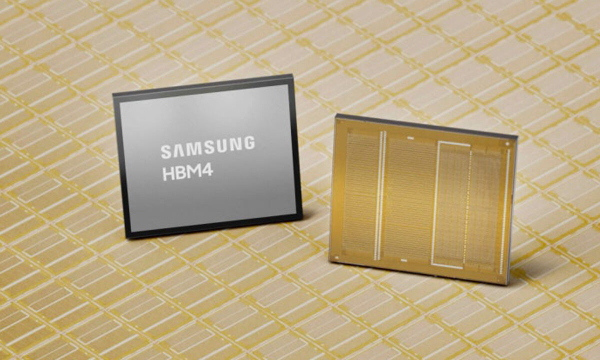
Samsung’s improving position in the HBM market is another potential catalyst for investor sentiment. The company began mass production and shipments of HBM4 in February, claiming stable data-processing speeds of 11.7 gigabits per second and bandwidth of up to 3.3 terabytes per second per stack. Samsung plans to begin shipping HBM4E samples in the second half of this year.
KB Securities expects Samsung Electronics’ average selling price for HBM to more than double next year from this year’s level. It also forecasts that Samsung’s share of the HBM4 market could rise to 44%, potentially putting the company in first place globally.
If that scenario materializes, Samsung could accelerate its transition from a business model centered on conventional memory products to one increasingly driven by high-value-added memory for AI applications. HBM products used in AI servers command higher prices and margins than conventional memory, meaning increased HBM shipments could improve both revenue and profitability.
The foundry business could also contribute to Samsung’s earnings recovery. KB Securities expects Samsung’s foundry division to return to profitability in the third quarter, excluding performance incentive provisions, for the first time in roughly four years since 2022. The expected improvement is tied to the full-scale production of language processing units (LPUs) using Samsung’s 4-nanometer process.
Samsung’s valuation also appears relatively low compared with global peers, according to the brokerage. KB Securities noted that Samsung Electronics, the world’s largest DRAM maker, is currently trading at a market capitalization approximately 4% below that of Micron, the No. 3 player in the DRAM market. When the premium typically applied to U.S. companies is taken into account, Samsung’s valuation appears even more discounted, the brokerage said.
The investment case for Samsung Electronics therefore extends beyond a simple recovery in the memory cycle. A combination of rising memory prices, increasing sales of high-value-added AI memory products, a recovery in HBM competitiveness, a potential foundry turnaround and a large-scale shareholder return program could simultaneously improve earnings and shareholder value.
Such developments could also accelerate the removal of the valuation discount that has weighed on Samsung Electronics’ stock.
“An aggressive shareholder return policy is likely to serve as the starting point for a re-rating of Samsung Electronics’ share price,” analysts Kim Dong-won and Lee Chang-min said, adding that the stock is currently in a phase where investors can consider aggressively increasing their exposure.
With AI infrastructure investment showing no signs of slowing and memory supply expected to remain tight for years, Samsung Electronics is increasingly being viewed not only as a beneficiary of the memory upcycle but also as a potential beneficiary of structural changes in the semiconductor industry and a more shareholder-friendly capital allocation policy.
