



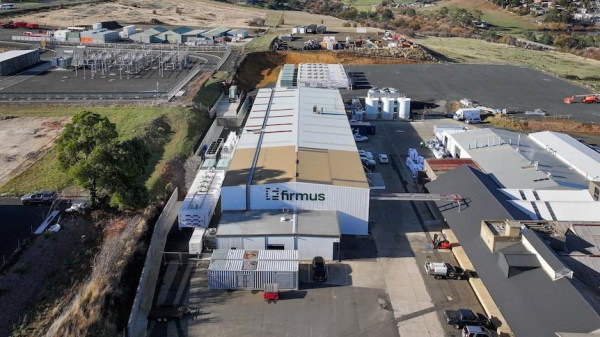
Financial markets are facing a more demanding task in assessing the growth prospects and valuations of artificial intelligence companies. OpenAI's annualized revenue was reported to be approaching $50 billion, approximately $20 billion below an earlier $70 billion figure. Meanwhile, Australian AI data center company Firmus, backed by NVIDIA, withdrew plans for a $5 billion initial public offering. The developments, reported on October 8 and 9, highlight two distinct challenges for investors: how AI revenue is measured and how much value should be assigned to infrastructure projects that have yet to deliver their projected returns.
The circumstances differ. OpenAI's reported revenue gap reflects differences in reporting methodology rather than evidence of a decline in actual sales. Firmus, by contrast, struggled to secure sufficient investor support for a proposed valuation that depended heavily on future expansion. Both cases demonstrate why headline growth figures and ambitious business projections require closer examination before they can support multibillion-dollar valuations.
OpenAI's $20 Billion Revenue Gap Reflects Different Reporting Methods
The Financial Times reported on October 8, citing financial information provided to investors, that OpenAI's annualized revenue was approaching $50 billion as of the end of September. That was approximately 28.6% below the $70 billion figure reported by some media outlets the previous month. Reuters subsequently confirmed the approximately $50 billion figure with a person familiar with the matter. OpenAI did not respond to Reuters' request for comment.
The discrepancy largely concerns how OpenAI and its competitor Anthropic account for revenue generated through cloud partners. Anthropic reportedly includes sales through Amazon Web Services and Google Cloud in its annualized revenue calculations, while OpenAI does not account for comparable sales in the same way. The difference became apparent as investors sought to compare the companies' growth on a consistent basis.
Annualized revenue run rate estimates a company's yearly sales based on revenue generated over a shorter period, often by multiplying the most recent month's revenue by 12. It provides a useful indication of a rapidly growing company's current business scale, but it should not be confused with revenue recognized over a completed financial year or with cash actually collected.
The difference between the two reported figures does not mean OpenAI's revenue fell by $20 billion. Because the figures reflect different reporting scopes, they cannot establish whether the company's growth rate has accelerated or slowed. A reliable assessment would require comparable period-by-period revenue figures calculated under consistent definitions, alongside recognized revenue, operating expenses and cash flow.
The distinction matters particularly when investors value AI companies using revenue multiples. Including or excluding sales through cloud partners can materially change the apparent size of a business. Even rapid revenue growth does not necessarily translate into profitability once model training, inference and computing costs are taken into account.
Firmus' IPO Withdrawal Exposes the Challenge of Valuing Future Capacity
While OpenAI's revenue reporting attracted scrutiny, another test of AI valuations emerged in Australia. Firmus, an AI data center company backed by NVIDIA, Coatue Management and Blackstone, withdrew its planned $5 billion IPO on October 9 and said it would pursue financing in private markets. The offering would have been Australia's second-largest IPO.
Firmus had proposed an offer price of A$11 per share, implying an equity valuation of approximately A$30.6 billion. That was nearly three times the A$10.5 billion valuation assigned to the company during a fundraising round in early August.
The company develops modular AI data centers using proprietary energy and cooling technology. It currently operates two leased data center facilities in Melbourne and Singapore, while five additional projects across the Asia-Pacific region remain in early development.
Firmus had outlined an ambition to generate $5 billion in annual earnings from its data center business within five years. Investors, however, questioned whether its existing operating record could support the proposed valuation and the scale of its planned expansion. The rapid increase in valuation, combined with a relatively limited track record in large-scale data center development, added to those concerns.
Joseph Koh, a portfolio manager at Blackwattle Investment Partners, which reviewed the offering but did not participate, told Reuters that the proposed price appeared to assume near-perfect execution of the company's future plans. He indicated that investors had insufficient grounds at this stage to be confident that those projections would be achieved.
Firmus said market volatility and the proposed offering terms did not adequately reflect its long-term growth prospects, prompting the decision to withdraw the IPO. The outcome also reflected company-specific concerns, including valuation, financing requirements and execution risk. It should therefore not be interpreted as a broad rejection of AI data center investment.
Nevertheless, the episode illustrates the limits of assigning present-day valuations to infrastructure capacity and earnings that remain largely prospective. Announced projects and long-term customer agreements do not automatically translate into operating revenue. Actual profitability depends on construction completion, utilization rates, customer demand, power and cooling expenses, and the ability to service debt.
The OpenAI and Firmus cases expose different weaknesses in the way AI businesses can be valued. For OpenAI, the central issue is how existing revenue is defined and measured. For Firmus, it is how much of a future business plan investors are prepared to recognize in today's equity valuation.
AI model developers frequently emphasize customer growth and annualized revenue as evidence of commercial momentum. Yet evaluating their profitability also requires an understanding of inference costs, cloud infrastructure expenses and customer acquisition costs. For data center operators, contracted capacity and projected revenue must be assessed against actual utilization, operating expenses, depreciation and financing costs. Large debt-funded infrastructure projects may require years of sustained operation before their investments generate adequate returns.
Neither development provides sufficient evidence that investor appetite for AI has broadly weakened. They do, however, demonstrate that different revenue definitions can produce materially different growth figures, while aggressive valuations based on future infrastructure plans may fail to secure investor support.
The financial value of an AI company cannot be established by announced investment commitments or contract volumes alone. Investors need to know how revenue is calculated, whether planned facilities are operating, how much customers actually pay and how much cash remains after the costs of delivering the service. OpenAI and Firmus offer two reminders that the economic value of AI growth ultimately depends on financial results that can be consistently measured and independently assessed.
