



Series Overview
This is more than a journey through Korea's nine UNESCO-listed Seowon. It is an exploration of more than 700 years of the Seonbi tradition—Korea's Confucian scholar-gentlemen who pursued learning, moral integrity, and public responsibility—and the educational philosophy that shaped Korean civilization.
Episode 1 | Why the World Took Notice of Korea's Seowon
Episode 2 | An Hyang and Sosu Seowon — The Beginning of Korean Education
Episode 3 | Yi Hwang and Dosan Seowon — How Learning Shapes Character
Episode 4 | Ryu Seong-ryong and Byeongsan Seowon — Leadership That Protected a Nation
Episode 5 | Yi Eon-jeok and Oksan Seowon — Philosophy Perfected in Nature
Episode 6 | Kim Goeng-pil and Dodong Seowon — The Roots of Moral Scholarship
Episode 7 | Jeong Yeo-chang and Namgye Seowon — The Seonbi Spirit Beyond the Capital
Episode 8 | Kim In-hu and Pilam Seowon — The Enduring Power of Integrity
Episode 9 | Choe Chi-won and Museong Seowon — A Philosophy of Harmony
Episode 10 | Kim Jang-saeng and Donam Seowon — Ritual, Community, and Everyday Life
Episode 11 | Are Seowon Relics of the Past—or Schools for the Future?
The series concludes by revisiting Lee Bae-yong's efforts to achieve UNESCO World Heritage inscription while reflecting on what the Seonbi tradition can offer education, leadership, and humanity in the age of artificial intelligence.
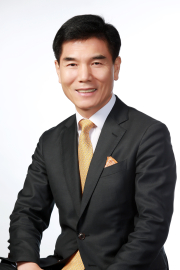
By Jung Yeon-Tae
President, Korea Information Service of the Construction Industry
When the morning mist settles over Yeongju, the foothills of Sobaeksan Mountain unfold like a traditional ink painting. Not far from the road leading to the ancient temple of Buseoksa stands a place where one of the most remarkable chapters of Korean intellectual history began.
That place is Sosu Seowon. Today, hundreds of Seowon remain throughout Korea, yet all of them trace their origins back to this single academy.
And at the beginning of that story stands one man. An Hyang.
He was the scholar who introduced Neo-Confucianism from Yuan China into Korea and laid the foundation for the philosophical tradition that would later shape the Joseon Dynasty. Without An Hyang, there might have been no Yi Hwang, no Yi I, and perhaps even a very different Korea.
The Meaning of "Sosu"
The name Sosu Seowon carries profound meaning. The character So (紹) means "to continue" or "to inherit," while Su (修) means "to cultivate" or "to refine oneself." Seowon (書院) refers to an academy dedicated to learning.
Together, Sosu Seowon signifies:
"A place where one inherits the wisdom of the sages and cultivates oneself through learning."
The name was bestowed by King Myeongjong of Joseon. In 1550, he granted the academy an official plaque, recognizing it as the first state-sanctioned Seowon in Korean history.
This royal recognition transformed Seowon from a local educational institution into an important part of the nation's intellectual life.
From Baegundong Seowon to Sosu Seowon
Originally, the academy was known as Baegundong Seowon. It was founded in 1543 by Ju Se-bung, the governor of Punggi, to honor An Hyang and promote learning in the region.
Although local schools already existed throughout the country, scholars sought places where they could pursue deeper study, moral cultivation, and intellectual exchange. Ju Se-bung envisioned such a place.
What began as a modest academy would eventually become the model for hundreds of Seowon established across Korea.
Yi Hwang's Defining Role
No story of Sosu Seowon is complete without Yi Hwang, better known by his pen name, Toegye. When he later served as governor of Punggi, he immediately recognized the academy's significance.
Yi Hwang petitioned the royal court, arguing that the institution deserved national support and protection. His recommendation was accepted.
King Myeongjong granted the royal plaque, and Baegundong Seowon became Sosu Seowon. Historians today regard this event as the formal beginning of Korea's Seowon tradition.
Yi Hwang understood that great educational institutions shape the future of a nation.
The Seed Planted by An Hyang
An Hyang was born in 1243 during the late Goryeo Dynasty. During a diplomatic mission to Yuan China, he encountered the teachings of Zhu Xi and Neo-Confucian philosophy.
At a time when Buddhism dominated intellectual life, An Hyang recognized the transformative potential of Neo-Confucian thought. He saw it as a philosophy capable of cultivating moral character and strengthening society.
Returning to Korea, he introduced Confucian texts, educational practices, and scholarly traditions that would later flourish throughout Joseon. Sosu Seowon stands today as a monument to that beginning.
Beyond the Buildings
Visitors often find Sosu Seowon surprisingly modest. It lacks the grandeur of royal palaces and the monumental scale of famous temples.
Yet standing quietly within its courtyards, one senses something deeper—the footsteps of scholars, the voices of students discussing philosophy, and the hopes of young intellectuals striving to improve their society. The spirit of five centuries seems to linger among its halls.
The significance of Sosu Seowon lies not in its architecture alone, but in the generations of people it helped shape.
Why UNESCO Recognized Sosu Seowon
In 2019, UNESCO inscribed nine Korean Seowon on the World Heritage List. Among them, Sosu Seowon occupies a special place as the symbolic beginning of the entire tradition.
UNESCO recognized in Sosu Seowon a remarkable educational legacy: the pursuit of knowledge, the cultivation of moral character, the strengthening of communities, and the transmission of values across generations.
What the world recognized was not simply a collection of historic buildings. It was an enduring philosophy of education.
A Question Beneath Sobaeksan
As one walks through Sosu Seowon, a question naturally arises: Why do we learn?
For examinations? For careers? For success?
The scholars of Joseon certainly sought achievement, but the deeper question they pursued was different.
"How should one live?"
Five centuries later, that question remains as relevant as ever. We now live in an age when artificial intelligence can provide information instantly, yet the cultivation of wisdom, character, and humanity remains a distinctly human endeavor.
Perhaps this is the greatest lesson Sosu Seowon offers us today. Learning is not merely about knowing more—it is about becoming a better human being.
About the Author
Jung Yeon-tae, who writes under the pen name Manri Pungchwi, is a cultural thinker and policy strategist. His research and writing connect history, philosophy, science, and technology, interpreting Korea’s traditional culture as a source of future value in an era of civilizational change and artificial intelligence.
Preview of Episode 3
Dosan Seowon | Yi Hwang: A Man Who Spent His Life Studying Himself
If Sosu Seowon planted the seed of Korean Neo-Confucian learning, Dosan Seowon is where that seed blossomed into one of the greatest intellectual traditions in East Asian history. In the next chapter, we travel to Andong to explore the life, philosophy, and enduring legacy of Toegye Yi Hwang, one of Korea's most revered thinkers.
