



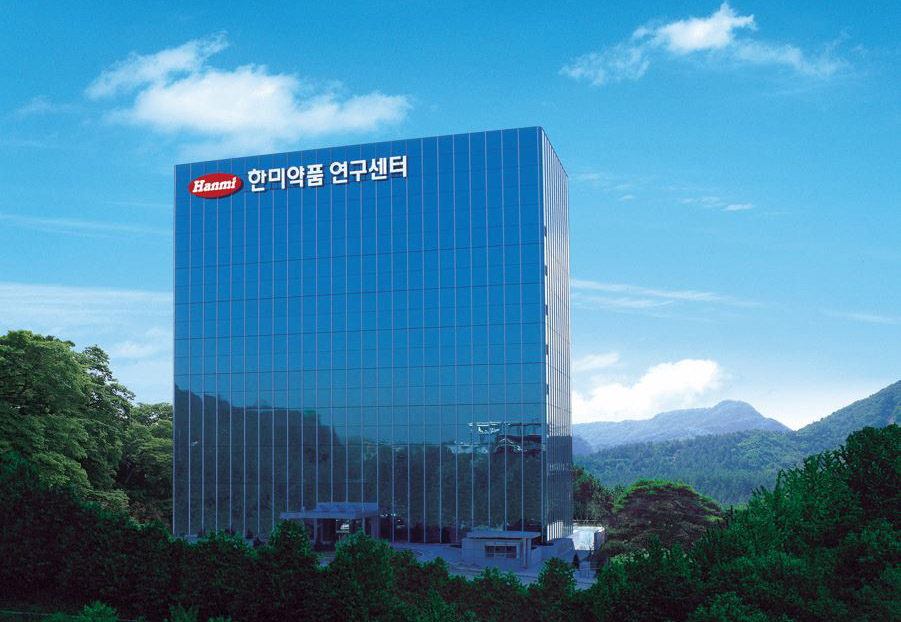
As competition in the global biopharmaceutical industry increasingly shifts from the scale of research and development spending to measurable innovation and productivity, Hanmi Pharmaceutical has been classified among the “Innovation Leaders” in a study of major drugmakers across Asia and other emerging markets.
The distinction is notable because Hanmi was recognized not simply for the amount it invests in R&D, but for building an innovative drug pipeline and translating research into outcomes including global licensing deals.
According to Hanmi Pharmaceutical on Monday, a recent paper published in Nature Reviews Drug Discovery, titled “R&D productivity trends for biopharma companies in Asia and emerging markets,” analyzed the research productivity of 45 major biopharmaceutical companies across Asia, Latin America, Eastern Europe, the Middle East and Africa.
The study examined companies with annual revenue of at least $500 million over the 15-year period from 2010 to 2025. Researchers assessed factors including R&D spending as a share of revenue, the composition of clinical pipelines and company sales.
The companies were divided into three categories based on their R&D investment and the proportion of innovative drug candidates in their pipelines: Innovation Leaders, Emerging Innovators and Generic Leaders.
Hanmi was placed in the Innovation Leaders group, with the researchers highlighting its innovation-focused pipeline and R&D productivity.
One of the most notable findings was the relationship between the company’s level of investment and its innovation output. Hanmi invested about 17 percent of its revenue in R&D, among the lower levels recorded by companies classified as Innovation Leaders over the past decade.
Despite the relatively lower investment ratio, the company was included in the group based on factors including the proportion of innovative drug candidates in its pipeline and its track record of global licensing agreements.
The findings suggest that R&D competitiveness does not necessarily depend on spending alone. How companies allocate resources to specific diseases and technologies — and translate those investments into pipelines and commercial outcomes — can be equally important.
The paper also highlighted Hanmi as an example of a company that has transitioned toward innovation by concentrating its research capabilities on metabolic and rare diseases.
Hanmi currently focuses its drug development efforts on obesity and metabolic disorders, oncology and rare diseases. The company is developing candidates based on its proprietary platform technologies while also pursuing open innovation with external companies and research institutions.
The authors of the paper said Innovation Leaders in Asia, particularly in South Korea and China, are increasingly positioned to emerge as strong competitors to established pharmaceutical companies in the United States and Europe.
The analysis also reflects a broader shift in how the competitiveness of Asian biopharmaceutical companies is assessed. As the cost of developing new medicines continues to rise, the ability to focus limited R&D resources on selected diseases and technologies — and convert them into innovative pipelines — is becoming increasingly important.
“This assessment is meaningful because it recognizes not simply the scale of our R&D investment, but our innovation-focused drug development strategy and results from the perspective of R&D productivity,” said Choi In-young, executive vice president and head of Hanmi Pharmaceutical’s Future Growth Division.
“We will continue to strengthen our global R&D competitiveness and develop differentiated innovative medicines that can deliver new treatment value to patients.”
Nature Reviews Drug Discovery is a Nature Portfolio journal specializing in drug discovery and development, covering scientific advances, R&D trends and innovation strategies across the global biopharmaceutical industry.
