



AI startup Echovane announced on August 10 that it has raised $1 million in a funding round co-led by Titan Capital and Neon Fund, as it seeks to automate the operational work behind complex market research.
The San Francisco-based company is developing AI agents that can manage research projects from study design and participant recruitment to fieldwork, data analysis and final delivery. The funding will be used to expand its AI-agent infrastructure, multimodal research capabilities and global participant network.
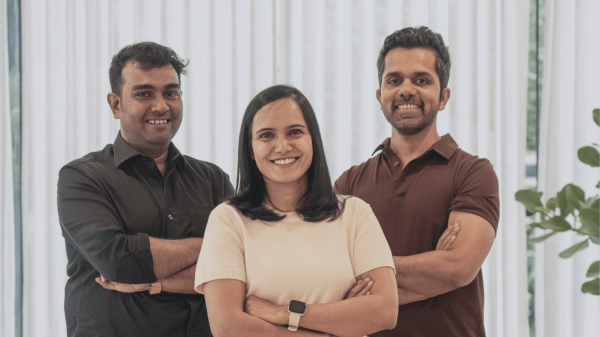
Echovane was founded by Smriti Gupta, Vipul Nair and Himadri Roy, former product and technology leaders from Amazon, Stripe, Gojek and Razorpay. The company says its services are already used by P&G, Haleon, Kantar and other consumer and technology businesses.
Unlike AI tools that assist with a single stage of research, Echovane positions itself as an end-to-end execution service. Clients provide a business question, while the platform coordinates the study and produces outputs such as reports, presentations, dashboards, structured datasets, participant quotations and video clips.
AI Moves From Research Tool to Execution Layer
Large consumer goods and retail companies can conduct hundreds of studies involving interviews, surveys, observations, longitudinal research and multiple geographic markets. These projects often require recruiters, participant panels, moderators, translators, analysts and production teams, creating a chain of operational dependencies.
Echovane argues that AI can take over much of this coordination while leaving interpretation and judgment to human researchers. Its agents are designed to recruit and verify participants, conduct research through voice, video and text, and analyse qualitative and quantitative evidence within the same workflow.
The company initially set out to develop an AI moderator for consumer interviews. It later expanded its focus after concluding that interviews represented only one part of a much broader operational problem.
“We thought better AI interviews would unlock faster research,” said Smriti Gupta, co-founder and CEO of Echovane. She explained that research projects frequently involve multiple methodologies, highly specific participants, strict deadlines and several layers of quality control.
The company is also building participant infrastructure intended to identify narrowly defined audiences across different regions. This includes hard-to-reach communities, people with specific behavioural characteristics and small but commercially important groups that conventional research panels may struggle to recruit.
Vipul Nair, co-founder and CTO, said the new funding would help Echovane strengthen the AI-agent infrastructure and participant network required to conduct increasingly complex studies across multiple markets.
Speed Raises New Questions About Research Integrity
The shift toward automated research execution could shorten project timelines, but it also raises questions about participant authenticity, methodological consistency and the reliability of AI-generated analysis.
Fraudulent participants, professional survey respondents and weak screening procedures can undermine a study before fieldwork begins. As AI assumes more responsibility for recruitment, moderation and analysis, the ability to trace each conclusion back to its original evidence will become increasingly important.
Echovane says researchers can continue examining the collected material after delivery, ask additional questions and trace findings back to individual interviews, observations or survey responses. This emphasis on traceability is intended to distinguish the service from AI systems that generate conclusions without showing how they were reached.
Haleon executive Zee Alcasid said Echovane had helped the company manage complex, multi-market studies involving difficult-to-reach participants and different languages. Adam D’Arcy, chief product officer at Trustly, said the platform reduced a product research process that previously took a month to two days.
Titan Capital said it backed Echovane because the company is applying AI across the entire research process rather than concentrating on a single task. Neon Fund said faster AI-moderated research could be particularly valuable in consumer packaged goods, where unsuccessful product launches can be costly and difficult to reverse.
Echovane’s broader test will be whether AI can reduce the time and cost of market research without weakening the quality of its evidence. The competitive advantage may ultimately depend less on how quickly its agents produce answers than on whether companies can verify and trust the process behind them.
