



“Learning to accept oneself as one is.”
At first glance, it may sound like a self-help slogan. Yet a growing body of longevity research suggests that emotional well-being and social connection are as critical to healthy aging as physical fitness and medical care.
Organizations such as the World Health Organization (WHO) increasingly define health not merely as the absence of disease, but as a state of physical, mental, and social well-being. For many women, whose lives often involve careers, caregiving, pregnancy, childbirth, and family responsibilities, emotional recovery and self-care are becoming essential elements of long-term health.
Healthspan Begins with Self-Care
A recent wellness program in Incheon, South Korea, showed how these principles can be translated into practice.
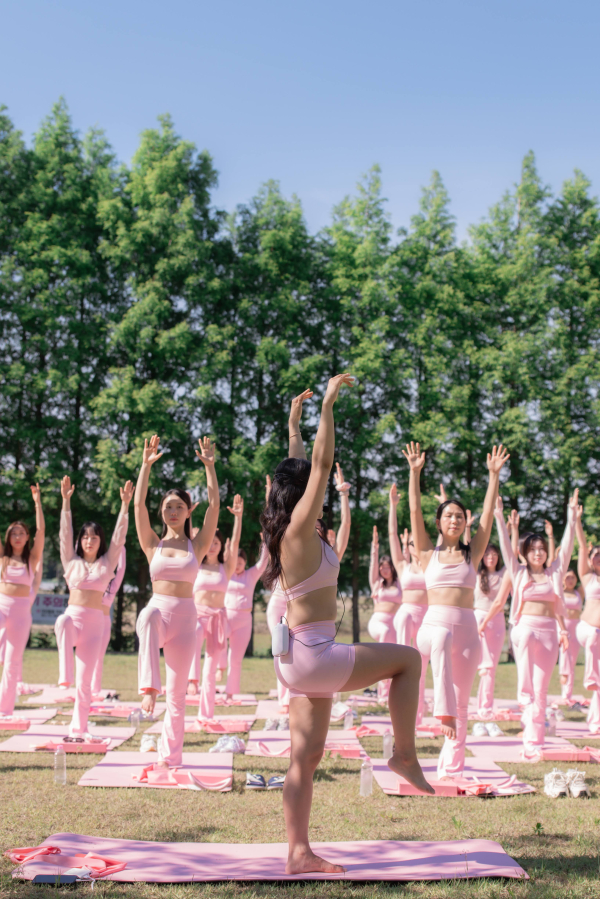
On May 31, wellness educators and co-founders of the wellness brand Yooasol, Yoo Min-jung and Cho Han-sol, hosted Pink Pilates Princess (PPP), a wellness event designed for women and expectant mothers at the Yeonhui Forest Healing Center in Cheongna.
Rather than focusing solely on exercise, the program created space for participants to reconnect with themselves. Set in a forest environment, the event combined Pilates, breathing exercises, body-awareness sessions, and personalized consultations, encouraging women to step away from daily pressures and devote time to their own well-being.
“The goal is for women to stop viewing themselves as projects that constantly need fixing,” said Yoo Min-jung, and “Wellness is not about achieving a perfect body. It is about learning to respect and care for oneself.”
Her view reflects a broader shift in longevity science. Chronic stress, social isolation, and emotional exhaustion are increasingly recognized as contributors to cardiovascular disease, depression, sleep disorders, and weakened immune function. Regular physical activity, meaningful relationships, and emotional resilience, by contrast, are associated with healthier aging and improved quality of life.
Cho Han-sol said wellness should be understood as more than physical training.
“Wellness is a process of understanding both the body and the mind,” she said. “It is about developing the capacity to heal, recover, and regain a sense of ownership over one’s life.”
The program was built around the physiological needs of women, with attention to hormonal cycles, posture, circulation, and stress regulation. Expectant mothers received individualized guidance and safety-focused consultations designed to support both physical and emotional health during pregnancy.
For participants, the event offered more than fitness instruction.
“I was able to focus entirely on myself in a natural setting while receiving thoughtful guidance from professionals,” said Son Deok-hee, an expectant mother who attended the event. “It was comforting to feel respected and supported as a woman.”
Connection Strengthens Longevity
The significance of the initiative extends beyond personal wellness. Yoo and Cho are preparing to expand the program into a broader social-wellness platform for multicultural families, immigrant women, and foreign residents living in Korea.
This next phase reflects another important theme in longevity research: the role of community in healthy aging.
Social isolation can negatively affect both physical and mental health, while strong social networks and meaningful community participation are linked to resilience, better health outcomes, and longer healthspans. By creating spaces where women can build relationships across cultural and linguistic boundaries, wellness programs can serve not only as health interventions but also as tools for strengthening social well-being.
As societies age, the meaning of wellness is changing. The focus is moving beyond disease prevention and weight management toward a broader goal: helping people remain healthy, engaged, and capable of contributing throughout longer lives.
This progression mirrors the emerging framework of longevity itself — from lifespan, to healthspan, and ultimately to contribution span: the ability to continue learning, participating, and contributing to society over an extended period of life.
The future of longevity will be shaped by medicine, biotechnology, artificial intelligence, and data-driven healthcare. Yet many foundations of healthy aging remain deeply human. Self-care, emotional recovery, meaningful relationships, and supportive communities continue to influence not only how long people live, but how well they live.
For women navigating the demands of modern life, wellness is more than a lifestyle trend. It is one of the most accessible pathways to a longer, healthier, and more fulfilling future.
