



~Landmark collaboration aims to unlock large-scale climate finance for over 3 million coconut farmers through Carbon Markets 2.0~
Davos, Switzerland — The Confederation of Coconut Farmers Organizations of the Philippines (CONFED) and EcoGuard Global AG signed an agreement at the World Economic Forum (WEF) Annual Meeting in Davos to develop what the parties described as the Philippines’ first Carbon Office, supported by a digital carbon financing and exchange platform built on Hedera. Telenym will participate as the local technology partner.
The partners said the initiative is intended to support emerging “Carbon Markets 2.0” requirements, including more frequent verification and stronger auditability and transparency. According to the announcement, the platform is designed to digitize and automate key steps in the carbon-credit lifecycle—such as project registration, digital monitoring, reporting and verification (dMRV), issuance, tracking, trading, and retirement—while maintaining traceability for credits.
EcoGuard said its infrastructure is designed to support regulated carbon-market functions and managed marketplaces across compliance and voluntary carbon markets. The company added that connecting domestic and international systems could help governments and enterprises engage carbon-market activity under evolving rules, including Article 6 of the Paris Agreement.
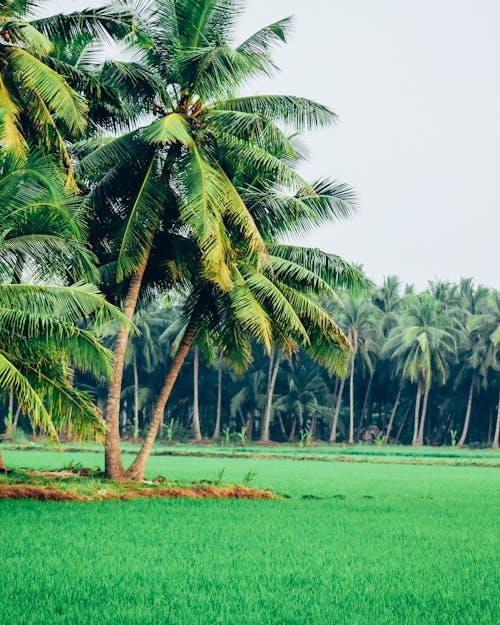
CONFED said it represents more than 3 million coconut farmers and that, under the Philippines’ COCAL Program, regenerative agriculture across 3.6 million hectares manages an estimated 540 million tonnes of CO₂e. EcoGuard said it plans to register 347 million coconut trees on its platform, with the aim of enabling farmers to access carbon finance linked to carbon sequestration associated with coconut landscapes.
Charles Avila, President of CONFED, said the shift toward real-time dMRV could shorten the time between measured sequestration and financial incentives compared with multi-year audit cycles, and he said the platform is intended to meet institutional requirements for carbon-market participation.
Yashodhan Ramteke, CEO of EcoGuard Global, said the partnership aims to expand access to climate finance for farmers through digitally verifiable processes aligned with Article 6, and to establish national-level carbon-market infrastructure that can support international participation.
EcoGuard said it is a Swiss-headquartered carbon-technology company and that it is deploying similar “State Carbon Banks” in other jurisdictions. The company is part of The Hashgraph Group, which operates within the Hedera ecosystem. The announcement also noted that in November 2025 The Hashgraph Group signed a collaboration agreement with the Philippines’ Department of Science & Technology (DOST) related to technology applications including smart agriculture and carbon-credit initiatives.
Under the agreement, EcoGuard will deploy, operate, and manage the CONFED Carbon Office, customized to national and sectoral requirements. The parties said the platform is targeted for deployment by June 2026 and is intended to support international carbon-credit trading under the UN Article 6 framework. The announcement said the system uses an industry-standard workflow engine and anchors cryptographic proof on Hedera during key process steps.
The Philippines is the world’s second-largest coconut producer, generating about 15 million tonnes annually, according to the announcement. The parties said international trading mechanisms under Article 6 could expand access to higher-value markets, with revenues intended to be distributed among farmers and to support replanting and investments in productivity and climate-resilience measures.