



The European Union is negotiating to reduce imports of Chinese-made vehicles while simultaneously seeking China's cooperation in easing rare earth export procedures. Europe wants to protect its automotive industry from the growing market share of Chinese manufacturers, yet it remains heavily dependent on Chinese supply chains for critical materials used in vehicle production. The contradiction illustrates a central challenge in European industrial policy: China is both a major competitor in the automotive market and an indispensable supplier of manufacturing inputs.
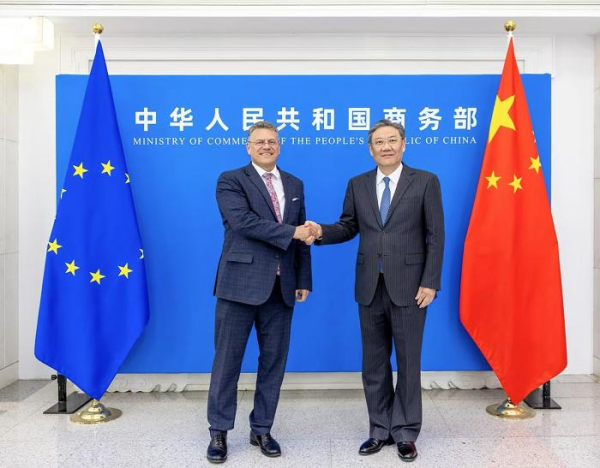
According to Reuters and the Associated Press on October 9, the EU and China reached a preliminary understanding following two days of trade negotiations in Beijing. The discussions covered a reduction in Chinese hybrid and plug-in hybrid vehicle exports to Europe and measures to facilitate export licensing for rare earths and permanent magnets. The EU also sought improved access to the Chinese market for European products, including automotive components, olive oil and footwear. However, the specific mechanisms and legal status of the proposed export restrictions have yet to be finalized, and further discussions among EU leaders are expected.
European Commissioner for Trade and Economic Security Maroš Šefčovič said the negotiations had opened the possibility of reducing Chinese hybrid vehicle exports to the EU by more than half. He described the outcome as "a crucial first step – but only a first step." His remarks underscored the need for continued negotiations on automotive trade, bilateral trade imbalances, market access and critical mineral supplies.
Surging Chinese Vehicle Imports Put Pressure on Europe's Automotive Industry
The EU's demand for reduced Chinese vehicle exports reflects mounting pressure on the competitiveness of European automakers. Chinese manufacturers have expanded their presence in Europe through large-scale production and competitive pricing. European carmakers, meanwhile, face both U.S. tariff pressures and intensifying competition from lower-priced Chinese vehicles, prompting adjustments to manufacturing operations and employment.
According to Reuters, EU imports of plug-in hybrid vehicles increased by 86% in the 12 months through September, while import prices fell by approximately 20%. China accounted for more than half of those imports. The figures illustrate how Chinese manufacturers have expanded their European sales while intensifying price competition.
The EU introduced additional tariffs on Chinese-made battery electric vehicles in 2024 following an anti-subsidy investigation. Chinese manufacturers, however, have not limited their European expansion to fully electric vehicles. Their growing exports of hybrid and plug-in hybrid models have complicated the EU's efforts to manage competition through existing trade defense measures.
The EU's push to reduce Chinese hybrid vehicle exports is a response to this shift. Šefčovič said the proposed arrangements could prevent millions of Chinese vehicles from entering the European market over the next four years. That remains a projected outcome of the negotiations, however, rather than evidence that exports have already fallen by half or that binding volume restrictions have taken effect.
Import restrictions alone will not necessarily restore the competitiveness of Europe's automotive industry. Reduced inflows of Chinese vehicles could ease pricing pressure on European manufacturers. But the benefits of market protection may remain limited unless automakers also improve production efficiency, technological development, electrification strategies and their ability to respond to changing consumer demand.
Higher vehicle prices could also shift part of the cost to European consumers. If the supply of lower-priced Chinese vehicles declines, domestic manufacturers may benefit from improved market conditions, while consumers could face fewer choices and weaker price competition. The economic benefits and costs of industrial protection would therefore be distributed differently between manufacturers and buyers.
Rare Earth Supply Chains Give China Additional Leverage
Europe's need to maintain cooperation with China, even as it seeks to restrict Chinese vehicle imports, stems partly from its dependence on rare earths and permanent magnets. Rare earth elements are used in electric vehicle motors, wind turbines, industrial robots, defense equipment and other advanced manufacturing applications. Certain high-performance permanent magnets are particularly important for improving the efficiency of electric and hybrid vehicle powertrains.
China holds a strong position not only in rare earth mining but also in processing, separation and permanent magnet manufacturing. Even if Europe succeeds in limiting China's influence in the finished-vehicle market, reducing its dependence on Chinese components and raw materials will take considerably longer. Vehicle manufacturing and critical material procurement therefore present European policymakers with different, and sometimes competing, objectives.
During the negotiations, China indicated that it would continue supporting a so-called green channel to facilitate export licensing for rare earths and permanent magnets. Such arrangements could reduce administrative uncertainty for European manufacturers seeking essential materials. However, faster licensing procedures would neither eliminate China's authority over export controls nor resolve Europe's underlying supply chain dependence.
According to China's Ministry of Commerce, Commerce Minister Wang Wentao argued that China was not the fundamental cause of the economic difficulties facing the EU and should instead be regarded as a partner in addressing them. His remarks reflected Beijing's position that Europe's industrial challenges cannot be attributed solely to rising Chinese imports.
Indeed, Europe's automotive difficulties extend beyond competition from Chinese manufacturers. High production costs, substantial investments in electrification, changing consumer preferences and U.S. trade policies have all contributed to pressure on the industry. Restrictions on Chinese imports may ease some competitive pressures, but they are unlikely to resolve these broader structural challenges on their own.
China also has economic reasons to preserve stable trade relations with Europe. As trade barriers rise in the United States and other major markets, Europe remains an important export destination for Chinese manufacturers. Beijing may therefore see value in accepting some adjustments to automotive trade in exchange for greater market access in other sectors and more predictable bilateral commercial relations.
Automotive Trade and Rare Earths Become Linked Negotiating Issues
The negotiations demonstrate how vehicle exports and critical mineral supplies can become interconnected elements of trade diplomacy rather than separate commercial disputes. The EU wants to reduce imports of Chinese vehicles while securing reliable access to Chinese rare earths. China, meanwhile, is discussing potential constraints on automotive exports while retaining its established position in critical material supply chains.
The EU's trade deficit with China expanded to an average of more than €1 billion per day last year. Beyond adjustments to automotive exports, the two sides discussed improving access to the Chinese market for approximately €4 billion worth of European products. The discussions covered automotive components, olive oil and footwear, along with possible tariff reductions on certain goods.
The scope of the negotiations shows that the dispute extends well beyond the automotive sector. Europe is pursuing industrial protection and export expansion at the same time, while China is addressing vehicle trade, critical mineral supplies and imports of European consumer goods within a broader negotiating framework. How EU member states with differing industrial interests respond to the proposed arrangements will also be an important factor.
Implications for South Korea's Automotive and Battery Industries
The preliminary understanding could reshape competitive conditions for South Korean automakers and battery manufacturers. If Chinese hybrid vehicle exports to Europe are substantially reduced, Korean automakers may gain opportunities in certain market segments. However, if the EU expands policies favoring European production and local sourcing, vehicles and components exported from South Korea could face additional challenges.
The implications for the battery industry cannot be assessed solely through changes in vehicle sales. Europe's electrification policies, local manufacturing requirements and the availability of Chinese battery materials will also influence industry conditions. Rare earths and permanent magnets belong to supply chains distinct from those of battery raw materials, but they remain essential components of vehicle electrification and are therefore relevant to broader procurement strategies.
South Korean companies will need to assess not only the possibility of reduced Chinese vehicle exports but also the expansion of European manufacturing, China's export licensing policies for critical materials and changes in European consumer demand. Restrictions on Chinese vehicles should not automatically be interpreted as a corresponding increase in sales of Korean-made vehicles.
The practical significance of the negotiations will become clearer during implementation. Key indicators will include how Chinese hybrid vehicle export volumes are managed, whether rare earth export licenses are processed more efficiently and whether European products gain meaningful access to the Chinese market.
Europe's continued reliance on Chinese rare earth supplies, even as it seeks to restrict Chinese vehicle imports, exposes the limits of industrial protection. Trade barriers may reduce competitive pressure in a particular market, but they cannot provide the supply chain independence that Europe has yet to establish in raw materials and components. The long-term competitiveness of Europe's automotive industry will depend not only on how effectively it limits Chinese vehicle imports but also on whether it can diversify critical material supplies and improve productivity and technological capabilities.
The same considerations apply to South Korea. Korean manufacturers need to capitalize on market opportunities created by trade protection while reducing excessive dependence on individual countries for essential materials and components. They must also adapt to changes in European manufacturing and supply chains. The EU-China negotiations illustrate how industrial competitiveness increasingly depends on a country's ability to manage competition in finished products alongside access to the critical materials required to produce them.
