



The Spiritual Heritage Recognized by UNESCO
A Journey Through the World Heritage of Korean Confucian Academies
Series Overview
Episode 1 | Why the World Took Notice of Korea's Seowon
Episode 2 | An Hyang and Sosu Seowon — The Beginning of Korean Education
Episode 3 | Yi Hwang and Dosan Seowon — How Learning Shapes Character
Episode 4 | Ryu Seong-ryong and Byeongsan Seowon — Leadership That Protected a Nation
Episode 5 | Yi Eon-jeok and Oksan Seowon — Philosophy Perfected in Nature
Episode 6 | Kim Goeng-pil and Dodong Seowon — The Roots of Moral Scholarship
Episode 7 | Jeong Yeo-chang and Namgye Seowon — The Seonbi Spirit Beyond the Capital
Episode 8 | Kim In-hu and Pilam Seowon — The Enduring Power of Integrity
Episode 9 | Choe Chi-won and Museong Seowon — A Philosophy of Harmony
Episode 10 | Kim Jang-saeng and Donam Seowon — Ritual, Community, and Everyday Life
Episode 11 | Are Seowon Relics of the Past—or Schools for the Future?
The series concludes by revisiting Lee Bae-yong's efforts to achieve UNESCO World Heritage inscription while reflecting on what the Seonbi tradition can offer education, leadership, and humanity in the age of artificial intelligence.
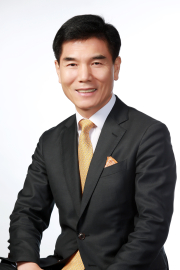
By Jung Yeon-Tae
President, Korea Information Service of the Construction Industry
Byeongsan Seowon
What Should a Scholar Do When a Nation Falls into Crisis?
Ryu Seong-ryong and the Enduring Lessons of Jingbirok
Beyond Hahoe Village in Andong, following the Nakdong River, a mountain stretches across the horizon like a giant folding screen. This mountain gave the academy its name: Byeongsan, meaning "screen mountain." Nestled beneath it stands Byeongsan Seowon, widely regarded as one of the most beautiful Confucian academies in Korea. Yet its true significance lies not in beauty.
It is a place where one man spent sleepless nights worrying about the fate of his country, where he reflected upon the devastation of war, and where he left a warning for future generations. That man was Ryu Seong-ryong. And the book he left behind was Jingbirok, "The Book of Reflection and Precaution."
The Origins of Byeongsan Seowon
The roots of Byeongsan Seowon can be traced to Pungak Seodang, an earlier educational institution that served local scholars. After the death of Ryu Seong-ryong, his disciples established a Seowon to honor his scholarship, public service, and moral example.
Founded in 1614 and later granted royal recognition, Byeongsan Seowon became more than a memorial academy. It became a place where Korea remembers one of its darkest national crises and the wisdom that emerged from it.
Who Was Ryu Seong-ryong?
Born in 1542 in Hahoe Village, Ryu Seong-ryong became one of the most accomplished scholar-officials of the Joseon Dynasty. He studied under Yi Hwang and excelled in both scholarship and government. Yet what secured his place in history was not office or prestige. It was the Imjin War of 1592.
When Japanese forces invaded Korea, the nation collapsed with alarming speed. Cities fell, defenses crumbled, and the king fled northward. Amid the chaos, Ryu Seong-ryong stood at the center of government. Rather than surrendering to despair, he searched for capable leaders who could save the nation.
The Man Who Recognized Yi Sun-sin
Today, Admiral Yi Sun-sin is celebrated as Korea's greatest military hero. Yet history might have unfolded differently without Ryu Seong-ryong. Ryu recognized Yi Sun-sin's extraordinary talent early and recommended him for key command positions. He also promoted other capable leaders such as Gwon Yul and Kim Si-min.
Ryu understood a timeless truth: Wars are not won by weapons alone. They are won by people. When a nation faces crisis, the first responsibility of leadership is to identify and empower the right individuals.
Why Jingbirok Was Written
After the war, Ryu retired to his hometown. There he began writing Jingbirok. The title means: "To learn from past mistakes and prevent future disasters."
Ryu did not write the book to condemn Japan. He wrote it to examine Korea's own failures. Why had the nation failed to prepare? Why had warnings been ignored? Why had capable people not been properly utilized?
Rather than blaming others, Ryu first scrutinized himself and his country. That is what makes Jingbirok one of the most remarkable works of political reflection in East Asian history.
The Responsibility of a Scholar
Byeongsan Seowon poses an enduring question: Why do we study? For examinations? For personal success? Or for society?
For Ryu Seong-ryong, learning carried responsibility. A scholar was not meant to remain detached from reality. A scholar had a duty to care for the people, the community, and the nation. Therefore, Byeongsan Seowon represents the meeting point of scholarship and action.
The Beauty of Byeongsan Seowon
Architecturally, Byeongsan Seowon is extraordinary. Its famous pavilion, Mandaeru, is considered a masterpiece of Korean wooden architecture. Standing there, one sees the Nakdong River flowing gently while Byeongsan Mountain stretches across the horizon. The scenery forms a perfect landscape painting.
Yet for Joseon scholars, nature was more than scenery. The river taught flow. The mountain taught stability. The wind taught humility. Nature became a teacher of character.
Why UNESCO Recognized Byeongsan Seowon
In 2019, UNESCO included Byeongsan Seowon among the nine Korean Seowon inscribed as World Heritage. The academy exemplifies the integration of education, community leadership, moral cultivation, and public responsibility.
It was not simply a school. It was a place where leaders were formed. The world recognized not merely its architecture, but the values embodied within it.
Reading Jingbirok Today
One of the striking aspects of Jingbirok is how modern it feels. Its themes remain relevant: Ignoring expert warnings. Political division. Failure to prepare for foreseeable risks. Mismanagement of talent.
Ryu believed such failures inevitably lead to crisis. This lesson applies not only to governments but also to corporations, institutions, and communities. The problem is not that crises occur. The problem is failing to prepare despite knowing they may come.
For that reason, Jingbirok remains not only a history book but also a manual for leadership and governance.
Ryu Seong-ryong in the Age of AI
We now possess more information than any generation before us. Yet information alone does not create wisdom. Ryu Seong-ryong's greatness lay not in gathering information, but in transforming knowledge into insight.
Artificial intelligence can analyze data. But determining which people to trust, which priorities matter most, and which decisions are ethically sound remains a human responsibility.
Ryu's message to us is clear: Insight matters more than information. Responsibility matters more than knowledge.
Leaving Byeongsan Seowon
Visitors may remember the beautiful scenery. But what remains longest is a question. When my community faces difficulty, what will I do? When my nation faces crisis, what responsibility will I accept? For whom is my knowledge being used?
Byeongsan Seowon is not merely a cultural monument. It is a school of responsibility. And Ryu Seong-ryong remains one of its greatest teachers.
About the Author
Jung Yeon-tae, who writes under the pen name Manri Pungchwi, is a cultural thinker and policy strategist. His research and writing connect history, philosophy, science, and technology, interpreting Korea's traditional culture as a source of future value in an era of civilizational change and artificial intelligence.
Preview of Part 5
Oksan Seowon
The Philosopher Who Found Himself in Nature
If Byeongsan Seowon represents responsibility toward society and the nation, Oksan Seowon represents the search for truth within the human heart and the natural world.
Our next journey takes us to Gyeongju, where we will encounter the profound philosophy of Hoegae Yi Eon-jeok and the intellectual roots of Korean Neo-Confucian thought.
