



Evidence Ledger examines transaction parties, fund flows and applicable periods before connecting statutes, precedents and evidence
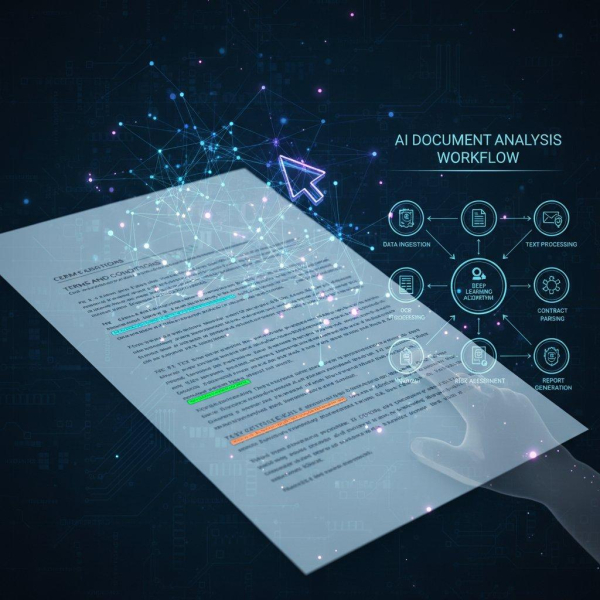
The Manripungchwi Jung Yeon-tae AI Research Institute has designed an artificial intelligence system that begins analyzing complex tax cases with the underlying facts rather than a single tax category. Called the “Korea Tax and Taxation OXMV GPT,” the system connects transaction parties, fund flows, assets, timing, applicable laws, evidence and procedural requirements within a unified case structure.
Tax outcomes in South Korea can vary according to the substance and timing of a transaction. When parents transfer money to a child, for example, the payment could represent a gift, loan, living expense, investment, reimbursement, purchase payment or debt repayment. If the parties claim it was a loan, a written agreement alone may not be sufficient; the transfer, interest payments, repayment of principal, the borrower’s ability to repay and the parties’ subsequent conduct may all require examination.
Property and corporate transactions become more complicated because a single event can trigger several taxes. Giving an apartment to a child may involve gift tax, acquisition tax and other local taxes, followed by property-related taxes during ownership and capital gains tax upon a later sale. If the recipient assumes an outstanding loan attached to the property, the donor may also face capital gains tax on the portion corresponding to the assumed debt.
The personal use of corporate funds by a company representative can similarly affect the company’s deductible expenses, income attributed to the representative, withholding obligations, personal income tax and social insurance contributions. Depending on the circumstances, civil or criminal issues may also arise.
The system also covers employees and freelancers. An employee earning additional income through YouTube, lectures, online sales or freelance services may need to determine whether it constitutes occasional or business income, whether it must be combined with employment income and whether it affects business registration, value-added tax or health insurance obligations.
The 3.3 percent commonly withheld from freelancer payments does not necessarily represent the final tax liability. The amount ultimately payable may change according to the nature of the income, total revenue, deductible expenses, other income and taxes already paid.
Analysis Begins with the Event, Not the Tax Named in the Question
OXMV GPT breaks down a user’s account into entities, relationships, events, assets, time, procedures and evidence. Users can therefore describe what happened without knowing the relevant tax category or legal terminology.
A user might say that their parents provided money for a home purchase, that they began earning YouTube income while working full time, or that they used corporate funds as the company’s representative. The system then identifies the parties, transactions, dates, assets, possible taxes, applicable laws, required evidence and potential procedures connected to the case.
The OXMV framework combines ontology, explainable AI and multiple verification. The ontology stage structures who transferred or paid what to whom, when the transaction occurred and what relationship existed between the parties. The explainable AI stage shows why particular taxes and legal provisions may apply.
The multiple-verification stage cross-checks statutes, enforcement decrees and regulations, official administrative interpretations, Tax Tribunal decisions and court precedents when necessary. Counter-evidence analysis looks for facts and legal arguments that may undermine the user’s position, while temporal validation identifies the law in effect when the event occurred.
The framework also includes an Evidence Ledger that records the connections between claims and supporting material. A separate component called the Fatal Error Gate is intended to prevent a definitive conclusion when the system detects a major problem, such as an incorrect tax rate or deadline, a nonexistent precedent, confusion between an individual and a corporation, or a failure to distinguish national and local taxes.
Timing is critical in tax analysis. A transaction completed in 2022 cannot automatically be assessed under the statutes and rates in force when advice is sought in 2026. Tax rates, deductions, special provisions, filing deadlines, penalties and threshold amounts may change, and legislation may be amended after a relevant court ruling.
The system therefore treats contract dates, payment dates, acquisition and disposal dates, gift dates, the opening date of an inheritance, taxable periods, filing dates and the delivery dates of official notices as core analytical elements. It distinguishes current law from the rules applicable when the event occurred and, where necessary, examines effective dates, supplementary provisions and transitional measures.
Procedures and deadlines become equally important when a matter advances to a tax audit or appeal. If a user provides a tax notice, advance assessment notice, Tax Tribunal decision or court judgment, the system identifies the document, issuing authority, action taken, actual delivery date and current procedural stage.
Confusing the date written on a notice with the date it was delivered could affect the deadline for challenging an assessment. Misclassifying an advance assessment notice as a final assessment could also alter the available response and appeal process.
For tax litigation, the system separates a judgment into its case number, court, decision date, ruling, recognized facts, arguments of the parties, applicable law, judicial reasoning, decisive factors and appeal status. This is intended to determine whether a precedent is factually and legally comparable to the user’s case rather than merely summarize the decision.
Evidence Ledger Traces Claims Back to Their Supporting Proof
The Evidence Ledger records how a tax conclusion was reached. Instead of simply stating that gift tax may be due, it identifies the facts used, whether they have been verified or only asserted, the available contracts and banking records, the laws applied, contrary material and information that remains unconfirmed.
For major cases, the design connects claims, facts, evidence, sources, legal rules, counter-evidence, temporal status, evidence gaps and verification status. When new material emerges or an existing fact changes, the ledger identifies which assessments and conclusions require reconsideration.
In a family loan dispute, a written agreement may support the taxpayer’s claim that money received from a parent was borrowed rather than gifted. If there were no interest or principal payments and the borrower lacked the ability to repay, however, the tax authority could present those facts as evidence of a gift.
OXMV GPT is designed to examine arguments and evidence that may be unfavorable to the user, including positions likely to be raised by a tax authority or court. For tax accountants, certified public accountants and lawyers, this function could operate as a form of “AI tax red teaming” that challenges an initial professional assessment.
Professionals could use it to check whether a tax category has been overlooked, whether contrary precedents exist, whether the correct law for the relevant period was applied, whether facts have been confused with inferences and whether an unresolved evidence gap could change the conclusion.
The system’s planned scope includes year-end tax settlements and side income for employees; withholding and comprehensive income tax for freelancers; value-added tax and deductible expenses for sole proprietors; and corporate tax, payments involving company representatives, salaries, dividends and related-party transactions.
It also covers corporate conversions and mergers and acquisitions, inheritance and gifts, family financing, unlisted shares, business succession, real estate transactions, nonprofit and public-interest corporations, social insurance, international taxation, tax treaties, transfer pricing, customs duties, free trade agreements, tax audits, arrears, appeals and tax litigation.
The institute said the system is intended to serve as a tax guidance tool for individuals who may not know what questions to ask, a decision-support tool for businesses examining tax exposure before completing a transaction and a verification tool for professionals seeking to identify missing issues and contrary evidence.
AI hallucination remains a significant risk in taxation because a system may present a nonexistent statute, precedent or case number as fact. Such errors can have direct consequences: an incorrect rate may change the calculated liability, an incorrect effective date may alter the legal analysis, and a wrong filing or appeal deadline may affect a taxpayer’s right to seek relief.
The Korea Tax and Taxation OXMV GPT is designed to compare verifiable information with official source material and mark unconfirmed facts as conditional or unresolved. Its stated purpose is to support broader and deeper verification while leaving final judgment and responsibility with qualified professionals.
More information is available through the Korea Tax and Taxation OXMV GPT shared page.
The Korea Tax and Taxation OXMV GPT was designed to support the structuring, analysis and verification of tax cases and related decision-making. It is not intended to replace legal representation or the final judgment of a qualified professional in individual high-risk cases.
Korean version availab le here
